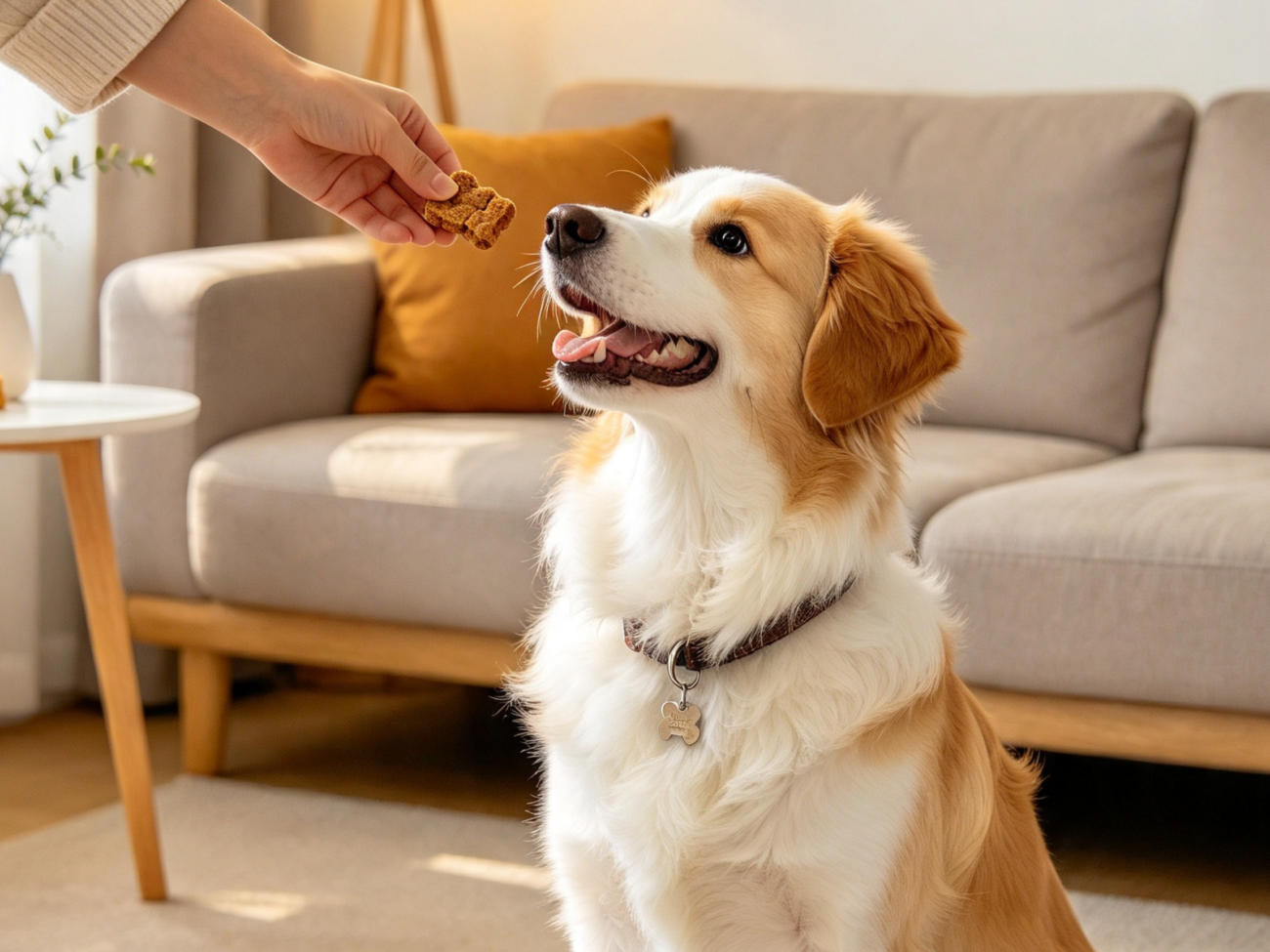
Sit, stay, and lie down are the foundation of good dog manners. They keep your dog safe, make daily life calmer, and open the door to more advanced training later on. The best part is that you don’t need fancy equipment or years of experience. All it takes is a handful of treats, a quiet space, and a little patience. Here’s how to teach each command step by step.
Before You Start: The Basics
A few simple habits will make every lesson easier.
- Use high-value treats. Small, soft, smelly treats work best. Your dog should think they’re worth the effort.
- Keep sessions short. Five to ten minutes is plenty. End while your dog is still eager, not tired or frustrated.
- Choose a quiet spot. Start at home, away from distractions like other pets, noise, or visitors.
- Reward immediately. Dogs connect the reward with what they did in the last two seconds, so timing matters.
- Stay consistent. Use the same word for each command every time, and make sure everyone in the household does too.
How to Teach Your Dog to Sit
Sit is usually the easiest command to teach, which makes it a great place to begin.
- Stand in front of your dog with a treat in your hand.
- Hold the treat close to their nose, then slowly move it up and slightly back over their head.
- As their nose follows the treat, their bottom will naturally lower to the floor.
- The moment they sit, say “Yes!” and give them the treat.
- Once they’re sitting reliably, add the word “sit” just before you lure them.
- Gradually fade the lure until your dog responds to the word alone.
Tip: Never push your dog’s bottom down. Let them figure it out. They’ll learn faster and enjoy it more.
How to Teach Your Dog to Lie Down
Once sit is solid, lying down is the natural next step.
- Ask your dog to sit.
- Hold a treat close to their nose, then slowly lower it straight down to the floor between their front paws.
- As they follow the treat, their body will lower into a down position.
- If they stand up instead, go back a step and try again more slowly.
- The moment their elbows touch the floor, say “Yes!” and reward.
- Add the word “down” once they’re lying down easily, and fade the lure over time.
Tip: If your dog struggles, try training on a soft surface like a rug or carpet. Some dogs are reluctant to lie on cold, hard floors.
How to Teach Your Dog to Stay
Stay teaches impulse control, and it’s one of the most useful commands for safety. Teach it in three parts: duration, distance, and distraction. Work on one at a time.
Step 1: Build duration
- Ask your dog to sit or lie down.
- Hold your hand up in a “stop” signal and say “stay.”
- Wait one or two seconds, then say “Yes!” and reward while they’re still in position.
- Slowly increase the time, one second at a time.
Step 2: Add distance
- Once your dog can stay for around 10 seconds, take one step back.
- Return to them, then reward. Don’t call them to you yet.
- Gradually increase the number of steps, always returning to reward.
Step 3: Add distractions
- Start with small distractions like a clap, a dropped toy, or you walking in a circle.
- Increase the challenge slowly, only after your dog succeeds at the current level.
Finish each stay with a release word such as “okay” or “free,” so your dog knows exactly when they’re allowed to move.
Common Mistakes to Avoid
- Repeating the command over and over. Say it once, then wait. Repetition teaches your dog to ignore you.
- Rushing the process. Moving to the next level too fast is the most common reason training stalls.
- Punishing mistakes. If your dog gets it wrong, simply reset and try again. Harsh corrections create stress and slow learning.
- Training when tired or hungry. A calm, slightly hungry dog learns best, but an overtired one will struggle.
- Forgetting the release word. Without it, your dog may guess when the exercise is over.
Troubleshooting: What If My Dog Isn’t Getting It?
If your dog seems stuck, take a step back. Make the task easier, shorten the session, or switch to a more exciting treat. Some dogs learn a command in a single afternoon, while others need a few weeks, and both are completely normal. Puppies, senior dogs, and rescue dogs may also learn at different speeds, so patience is essential.
Final Thoughts
Teaching your dog to sit, stay, and lie down is about more than obedience. It builds trust, improves communication, and gives your dog the confidence to handle new situations calmly. Keep the sessions fun, celebrate every small win, and practice a little every day. Before long, these three simple commands will become second nature for both of you.