Complete Boston Terrier Breed Guide
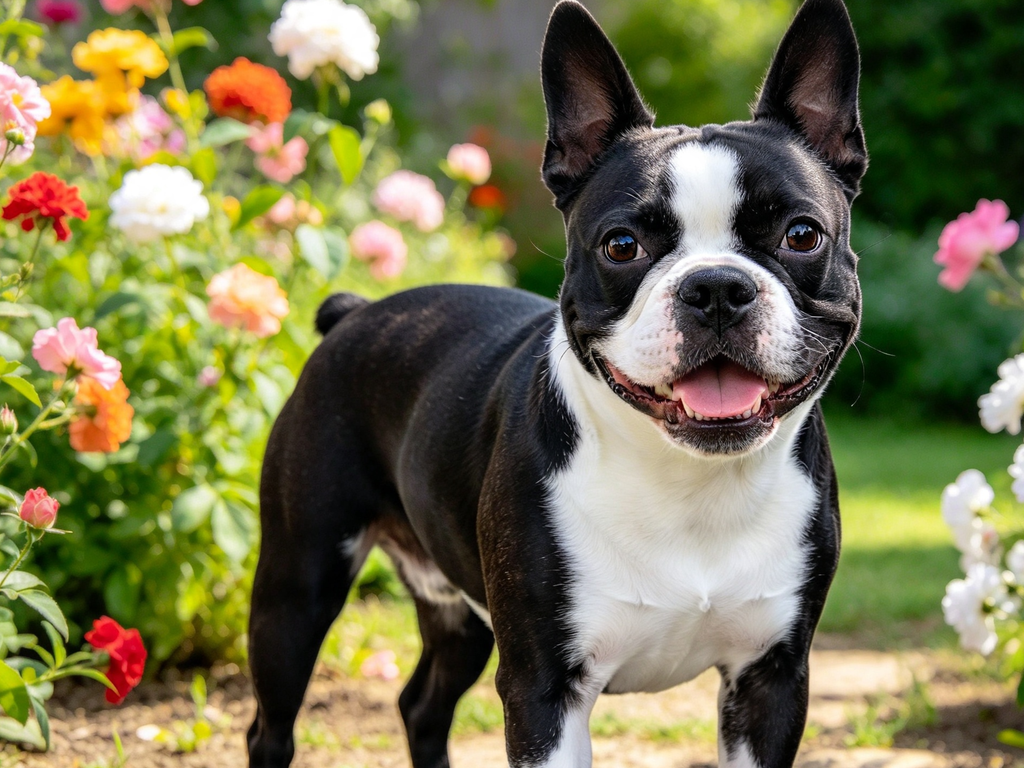
Welcome to our complete Boston Terrier breed guide .With its tuxedo-like coat, big round eyes, and upright bat ears, the Boston Terrier is one of the most charming small dogs in the world. The breed was developed in Boston, Massachusetts, in the 19th century from crosses between English Bulldogs and English Terriers, and it was first bred as a fighting dog before becoming a gentle companion. It is often nicknamed the “American Gentleman” because of its black-and-white “tuxedo” markings and polite manners. In French, it is called the Boston Terrier.
Thinking about adopting one? Here’s what you should know.
How Big Is a Boston Terrier?
The Boston Terrier is a small, compact, and well-balanced breed, and it comes in three weight classes.
- Height: 38-43 cm (15-17 in)
- Weight: Under 6.8 kg (15 lb) for small, 6.8-9 kg (15-20 lb) for medium, and 9-11 kg (20-25 lb) for large
- Lifespan: 11-13 years
- Coat: Short, smooth, and fine, in black, brindle, or seal with white markings, often forming a “tuxedo” pattern
- Face: Short muzzle, large round eyes, and erect ears. Ears are naturally upright, although cropping is banned in many countries.
Personality: Friendly, Lively, and Affectionate
Boston Terriers are known for their happy and gentle nature.
- Friendly and sociable: They love people, children, and other pets.
- Affectionate and loyal: They bond closely with their family and love to cuddle.
- Playful and lively: They are energetic, especially when young, and love a good game.
- Intelligent and eager to please: They learn quickly, but they can be stubborn at times.
- Clownish: They love to entertain and often make people laugh.
- Adaptable: They are happy in apartments and houses alike.
- Needy for company: They do not like being left alone for long hours.
Expect a dog that snores, snorts, follows you everywhere, and greets you with a wiggling body.
How to Take Care of a Boston Terrier
Feeding
Following a proper Boston Terrier breed guide for nutrition is essential…
Choose a high-quality food made for small breeds. Boston Terriers gain weight easily, so measure portions and limit treats. Some dogs have sensitive stomachs and can suffer from gas, so ask your vet if the problem is frequent. Slow-feeder bowls can help dogs that eat too fast and swallow air.
Exercise
Following a Boston Terrier breed guide exercise schedule ensures your dog stays healthy.
Plan for 30 to 60 minutes of exercise per day: walks and play. Because of their short muzzle, avoid intense exercise, especially in hot or humid weather. Mental stimulation, such as training games and puzzle toys, keeps them happy.
Grooming
Maintaining a regular Boston Terrier breed guide grooming routine helps keep their coat clean.
- Brush weekly with a soft brush or grooming mitt. Boston Terriers shed lightly all year round.
- Bathe only when needed.
- Clean the facial folds and the eye area regularly with a soft damp cloth, and dry them well.
- Clean ears, trim nails, and brush teeth regularly.
Temperature
Because of their short muzzle, Boston Terriers overheat easily. Provide shade, fresh water, and a cool room in summer, and never leave them in a car. Their thin coat also means they get cold quickly, so a coat helps in winter.
Training and Socialization
Boston Terriers are smart and eager to please, but they can be sensitive and a bit stubborn. Start early with socialization and basic obedience. Use positive reinforcement with treats and praise, keep sessions short and fun, and avoid harsh methods. Housetraining can take some patience. Use a harness rather than a collar to protect their delicate airways.
Common Health Issues
Boston Terriers are generally healthy, but the breed is prone to certain conditions:
- Breathing difficulties (brachycephalic airway syndrome)
- Eye problems (such as corneal ulcers, cherry eye, cataracts, and glaucoma)
- Patellar luxation
- Deafness
- Skin allergies
- Heart conditions (such as heart murmurs)
- Heatstroke
- Cancers (such as mast cell tumors)
- Digestive sensitivities and gas
Many Boston Terriers need a C-section to give birth. Choose a responsible breeder who health-tests the parents (eyes, heart, hearing, and knees), and schedule regular vet check-ups. Pet insurance is worth considering.
Is a Boston Terrier Right for You?
A Boston Terrier could be perfect if you want a friendly, adaptable companion, live in an apartment, and can offer daily attention and moderate exercise.
It may not be the best match if you live in a very hot climate, are away for long hours, dislike snoring and gas, or are not prepared for possible vet costs.
Final Thoughts
Friendly, funny, and endlessly loyal, the Boston Terrier is a wonderful companion that fits well into family life. With attention to heat, weight, and eye care, your Boston Terrier will be a joyful friend for many years.
“We hope this Boston Terrier breed guide helps you decide if this dog is right for you.”