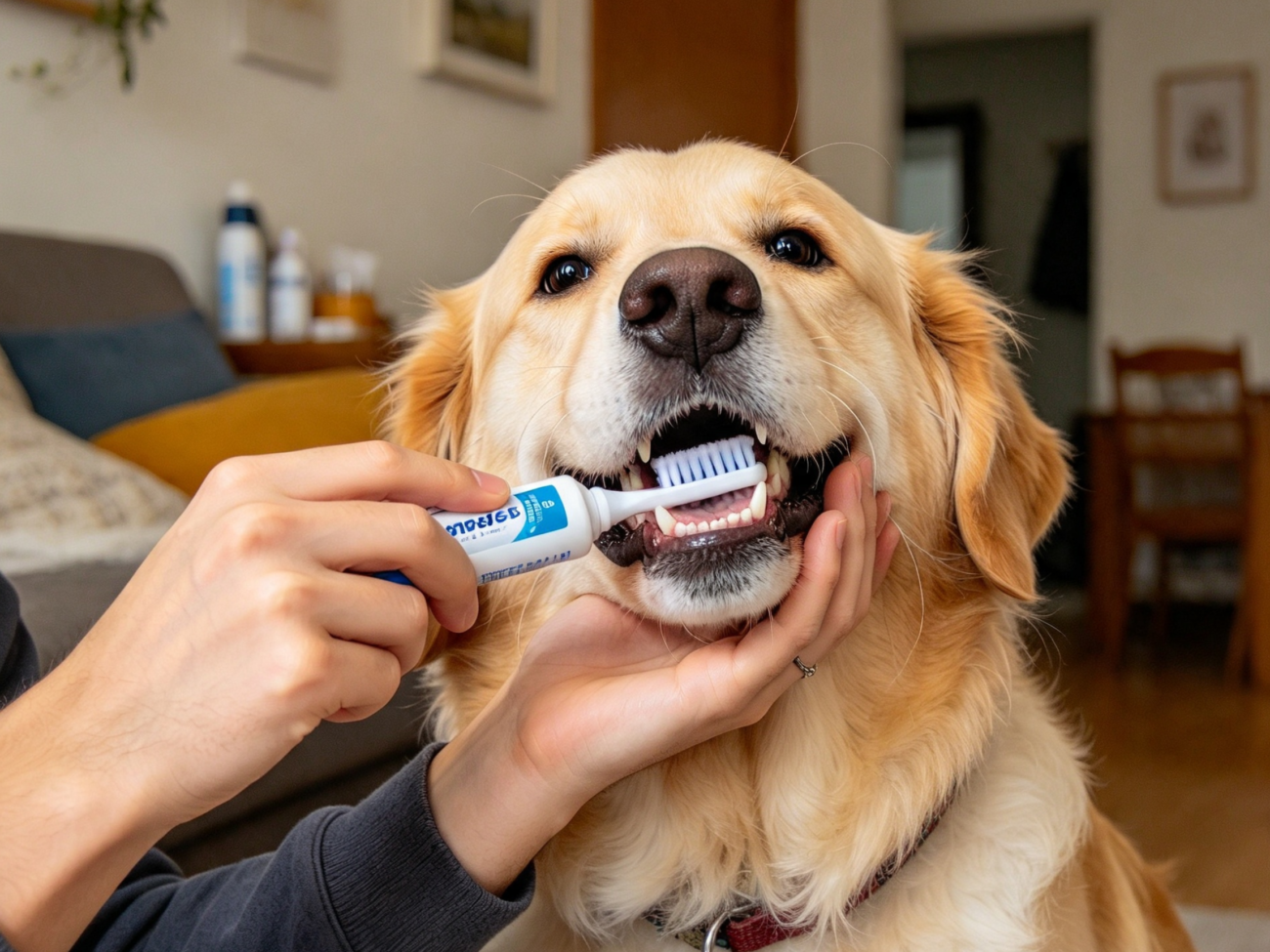
Brushing your dog’s teeth probably isn’t the first thing that comes to mind when you think of pet care. It might even sound a little ridiculous. But dental health is one of the most overlooked parts of a dog’s overall well-being, and it makes a bigger difference than most owners realize. Most dogs show signs of dental disease by the time they’re three years old, and the effects go far beyond bad breath. The good news is that a few minutes of brushing each week can prevent most of these problems. Here’s why it matters and exactly how to do it.
Why Brushing Your Dog’s Teeth Matters
Just like in humans, plaque builds up on a dog’s teeth every day. If it isn’t removed, it hardens into tartar within a few days, and tartar can’t be brushed away at home. Over time, this leads to:
- Bad breath. Persistent “doggy breath” is often a sign of bacteria buildup, not just something your dog ate.
- Gum disease. Red, swollen, or bleeding gums are the first signs, and the condition can progress to painful infections.
- Tooth loss. Advanced dental disease can loosen teeth and damage the bone that supports them.
- Pain and eating difficulties. Dogs hide discomfort well, so many suffer for months before their owners notice.
- Wider health problems. Bacteria from the mouth can enter the bloodstream and may affect organs such as the heart, liver, and kidneys.
- Costly vet bills. Professional dental cleanings under anesthesia can be expensive, and regular brushing helps you need them less often.
How Often Should You Brush?
Daily brushing is ideal, since it removes plaque before it hardens. If that feels like too much, aim for at least three times a week. Even occasional brushing is better than none, so don’t let perfection get in the way of progress.
What You’ll Need
You don’t need much to get started.
- Dog toothpaste. Choose one made for dogs, in a flavor like chicken, peanut butter, or beef. Never use human toothpaste, since it often contains ingredients that are harmful if swallowed, including fluoride and xylitol.
- A dog toothbrush. Options include a long-handled brush, a small brush for little dogs, or a finger brush that slips over your fingertip.
- Treats and praise. Positive rewards turn brushing into something your dog looks forward to.
- Patience. Most dogs need a few weeks to feel comfortable, so take your time.
Step-by-Step: How to Brush Your Dog’s Teeth
The secret to success is going slowly. Rushing is the most common reason dogs learn to hate brushing.
Step 1: Choose the Right Moment
Pick a time when your dog is relaxed, such as after a walk or play session. A calm dog is far more cooperative than an energetic one. Sit in a quiet spot with good lighting, and keep everything within reach.
Step 2: Let Them Taste the Toothpaste
Put a small amount of dog toothpaste on your finger and let your dog lick it. Most dogs love the flavor. Do this for a few days until they’re eager for it, and give a treat afterward.
Step 3: Touch Their Mouth Gently
Once your dog enjoys the taste, gently lift their lip and rub a finger along their gums and teeth. Keep it short and positive, then reward. Repeat over several sessions until they’re comfortable with the sensation.
Step 4: Introduce the Brush
Add toothpaste to the brush and let your dog sniff and lick it. Then start brushing a few teeth at the front, just for a few seconds. Stop before your dog gets restless, and reward them right away.
Step 5: Brush the Outer Surfaces
Hold the brush at a 45-degree angle to the gums and use small circular motions. Focus on the outer surfaces of the teeth, especially the back teeth and canines, where plaque builds up most. You don’t need to force the mouth open, and the inner surfaces are less important because the tongue keeps them cleaner.
Step 6: Build Up Gradually
Over a few weeks, work up to brushing all the teeth for about 30 seconds per side, or about one to two minutes in total. Always end on a positive note with praise, a treat, or a short play session.
Tips to Make Brushing Easier
- Start early. Puppies adapt quickly, but adult and senior dogs can learn too.
- Keep sessions short. A calm 30 seconds beats a stressful two minutes.
- Stay relaxed. Dogs pick up on your tension, so speak in a soft, cheerful voice.
- Use the same routine. Same time, same place, same rewards.
- Try a finger brush if your dog is nervous about a regular brush.
- Never punish. If your dog resists, take a step back and slow down.
What If Your Dog Won’t Let You Brush?
Some dogs simply need more time, and that’s normal. If brushing isn’t working yet, these alternatives can help, though none is a full replacement:
- Dental chews approved by the Veterinary Oral Health Council (VOHC)
- Dental wipes to gently clean the surface of the teeth
- Water additives or oral gels designed for dogs
- Dental diets formulated to reduce plaque and tartar
- Safe chew toys that help scrape the teeth as your dog chews
Avoid very hard items like real bones, antlers, and hard nylon toys, since they can fracture teeth. A good test is that if you can’t press a fingernail into it, it may be too hard.
Signs of Dental Problems to Watch For
Even with good care, problems can still appear. Contact your vet if you notice:
- Persistent bad breath
- Red, swollen, or bleeding gums
- Yellow or brown buildup on the teeth
- Loose, broken, or missing teeth
- Drooling more than usual
- Dropping food, chewing on one side, or reluctance to eat
- Pawing at the mouth or face
- Swelling under the eye or on the face
Professional Cleanings Still Matter
Home brushing is powerful, but it doesn’t replace regular dental checkups. Most vets recommend a professional exam at least once a year, and some dogs, especially small breeds, need cleanings more often. A vet can remove hardened tartar, check below the gumline, and spot problems you can’t see at home.
Final Thoughts
Brushing your dog’s teeth might feel awkward at first, but it’s one of the simplest and most effective ways to protect their health. A few minutes a few times a week can mean fresher breath, a healthier mouth, fewer vet bills, and a longer, more comfortable life for your best friend. Start slow, keep it positive, and make it part of your routine. Your dog might never ask for a toothbrush, but their smile will thank you.
This article is for general information and is not a substitute for professional veterinary advice. If you’re concerned about your dog’s dental health, contact your veterinarian.