Barking is a completely natural way for dogs to communicate. They bark to greet family members, signal potential danger, ask for play, or simply express boredom. However, when you need to stop excessive dog barking because the noise never seems to stop, it can wear on your nerves, strain relationships with neighbors, and make daily home life extremely stressful.
The good news? Nuisance barking is a solvable problem. The key is understanding why your dog is barking and applying the right positive reinforcement technique. Here are 5 simple, expert-approved ways to quiet your dog and stop excessive dog barking for good.
Table of Contents
Why Is My Dog Barking So Much?
No single fix works for every dog because the solution depends directly on the root cause. Before you can stop excessive dog barking, you must identify what triggers the behavior. According to experts at the American Kennel Club (AKC), the most common reasons dogs bark too much include:
- Boredom and energy build-up: A dog without enough physical or mental stimulation will find ways to entertain themselves, often through barking.
- Alerting or territorial guarding: Dogs bark at passersby, delivery drivers, or unexpected noises to guard their home and territory.
- Attention seeking: If barking has gained them treats, toys, or your attention in the past, they will keep repeating the behavior.
- Anxiety and fear: Many dogs bark when left home alone or when exposed to unfamiliar, scary triggers.
- Over-excitement: High-arousal moments like greetings, play, or preparing for walks often trigger demand barking.
Once you identify your dog’s specific trigger, you can implement the targeted strategies below to stop excessive dog barking effectively.
5 Simple Ways to Stop Excessive Dog Barking
1. Increase Exercise and Mental Stimulation
A tired dog is a quiet dog. Daily physical exercise paired with brain games effectively burns off the excess energy that leads to nuisance barking.
- Provide enrichment toys, snuffle mats, and puzzle feeders during peak barking hours.
- Integrate short, positive obedience training sessions into your daily routine. If you need a complete guide to obedience basics, read How to Teach Dog to Sit Stay Lie Down.
- If your dog barks out of restless energy at home, check out our guide on 5 Simple Ways to Keep Your Dog Mentally Stimulated at Home.
2. Stop Rewarding the Barking Behavior
Dogs repeat behaviors that get results. If you feed your dog when they bark at the dinner table or yell back at them, you are giving them attention—which reinforces the habit.
- The Golden Rule: Completely ignore attention-seeking barking. Do not make eye contact, speak, or touch your dog.
- Wait until they offer at least a few seconds of complete silence, then immediately reward them with quiet praise or a high-value treat.
3. Teach the “Quiet” Command
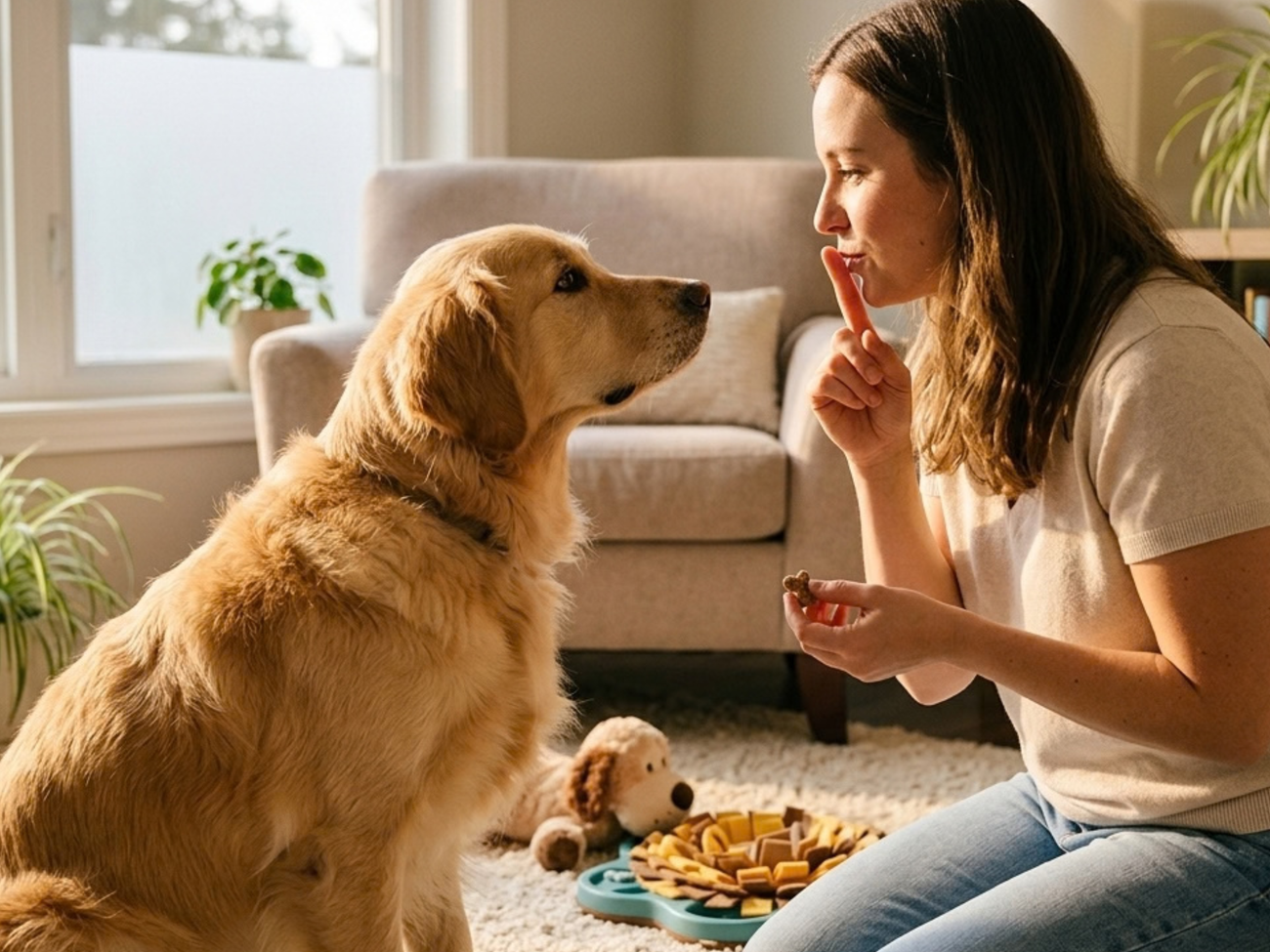
Teaching a reliable “quiet” cue gives you a gentle, structured way to interrupt barking and stop excessive dog barking in real-time.
- Allow your dog to bark once or twice when triggered.
- Say “Quiet” in a calm, clear, and steady voice.
- Hold a high-value treat directly in front of their nose. Most dogs will pause barking to sniff the food.
- The exact moment they stop barking, say “Yes!” and deliver the treat.
- Gradually extend the duration of silence required before giving the reward. For complementary impulse control work outdoors, see our guide on Dog Recall Training.
4. Manage the Environment to Reduce Triggers
Modifying your dog’s environment can eliminate many common barking triggers instantly:
- If your dog guards windows, apply frosted window film or pull the blinds down.
- Use background white noise, gentle music, or a TV to mask outdoor sounds that set off alert barking.
- Practice calm door-greeting routines by rewarding your dog for settling on a bed when the doorbell rings. If leash reactivity or pulling is an issue during walks, review How to Stop Your Dog from Pulling on the Leash.
5. Address Separation Anxiety
If your dog barks primarily when left alone, they may be experiencing separation anxiety. This is often accompanied by pacing, drooling, destructive chewing, or howling.
- Build alone-time tolerance gradually, starting with very short absences (a few minutes at a time).
- Provide a safe, food-stuffed chew toy (like a frozen KONG) right before you leave to create a positive association.
- For structured routines to help anxious pups stay calm alone, check out our guide on Dog Separation Anxiety as well as our advice on How to Crate Train Your Puppy Without Stress.
Frequently Asked Questions (FAQ)
How long does it take to stop excessive dog barking?
With consistent daily training and trigger management, most owners see noticeable improvements within 2 to 3 weeks. However, entrenched habits may require several months of consistent work.
Should I use a bark collar to stop excessive dog barking?
Aversive tools like shock or citronella collars are not recommended. They address the symptom rather than the underlying cause (such as fear or excitement) and often increase anxiety or trigger aggression over time.
Common Mistakes to Avoid
- Yelling at your dog: Your dog perceives shouting as you joining in on the barking.
- Inconsistency: Allowing barking on some days while correcting it on others confuses your pet.
- Expecting instant silence: Barking is a natural behavior; the goal is to control nuisance barking, not eliminate all vocalizations.
Final Thoughts
Learning how to stop excessive dog barking requires patience, consistent boundaries, and positive reinforcement. By identifying your pup’s triggers and providing healthy outlets for their energy, you can restore peace and quiet to your home!