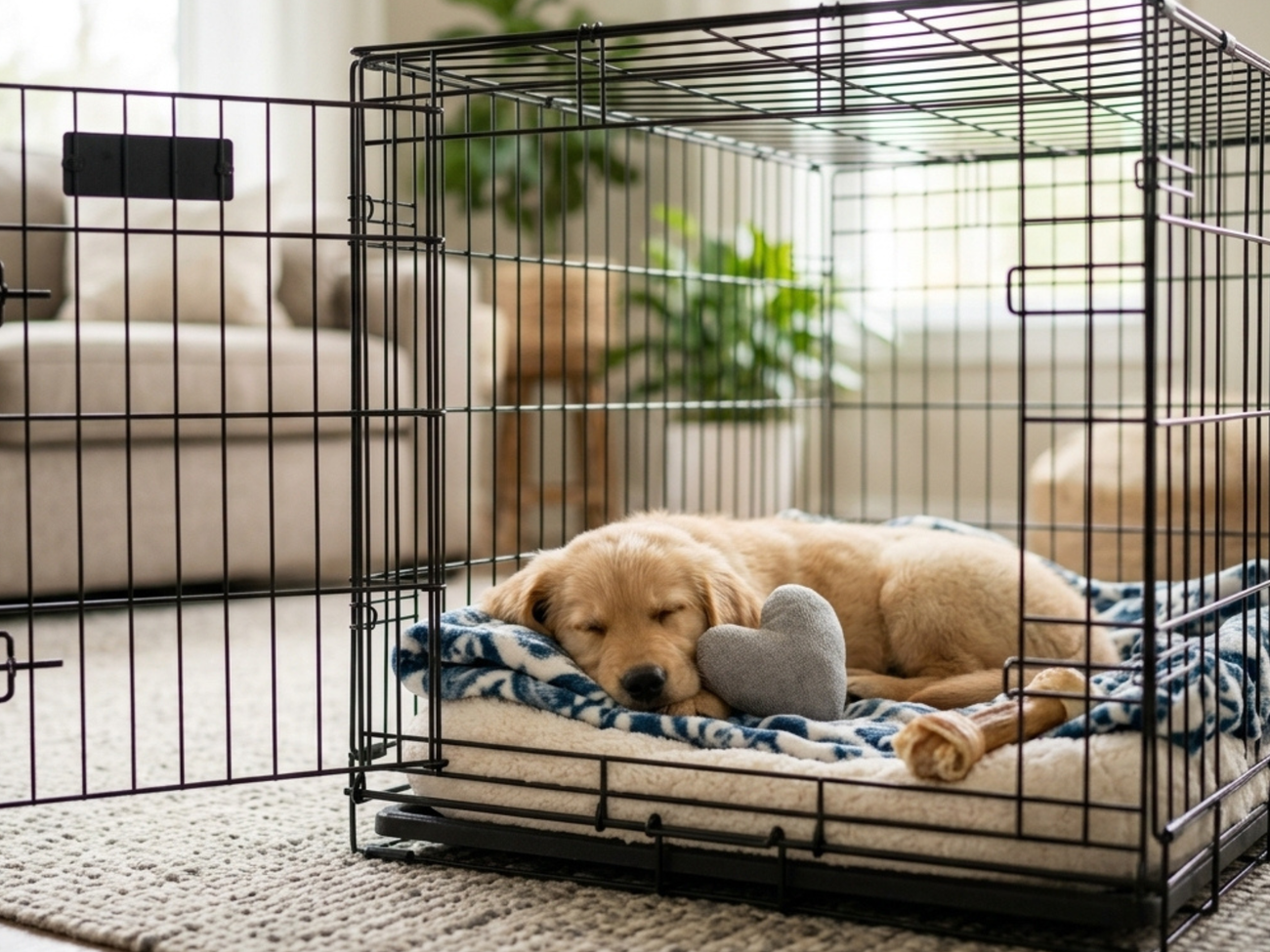
How to Crate Train Your Puppy Without Stress: 5 Easy Steps
Crate training has a reputation problem. Some people picture it as a cage or a punishment, but when done right, learning how to crate train your puppy transforms the crate into your dog’s favorite spot—a cozy, safe den where they can rest, recharge, and feel completely secure.
It also makes house-training easier, keeps your puppy safe when you can’t supervise, and helps them handle travel and vet visits with far less anxiety. According to expert behavior guidelines on the American Kennel Club (AKC), learning to crate train your puppy early builds lifelong confidence. The key is going slowly and making the crate a happy place. Here is how to crate train your puppy without tears (yours or theirs).
Table of Contents
Why Crate Training Is Worth It
Dogs are natural den animals. In the wild, they seek out small, enclosed spaces where they feel protected. A properly introduced crate taps closely into that natural instinct. When you crate train your puppy, the main benefits include:
- Faster house-training: Puppies avoid soiling the area where they sleep, which helps them learn bladder control much faster.
- Safety at home: When you crate train your puppy, it keeps them away from electrical cords, toxic plants, shoes, and anything else they shouldn’t chew.
- A built-in quiet space: Your puppy always has a designated place to retreat when the house gets busy or overwhelming.
- Easier travel and vet visits: Knowing how to crate train your puppy ensures they stay far calmer in cars, hotels, and veterinary waiting rooms.
How to Choose the Right Crate
Size matters when you prepare to crate train your puppy. The crate should be big enough for your puppy to stand up, turn around, and lie down comfortably, but not so large that they can use one corner as a bathroom.
- Wire crates: Offer good ventilation and visibility, and many come with adjustable dividers as your puppy grows.
- Plastic crates: Feel more enclosed and den-like, and they are often airline approved for travel.
- Soft-sided crates: Lightweight and convenient, but best reserved for calm dogs who won’t chew or scratch.
Pro Tip: If you are buying for a puppy who will grow significantly, choose a crate that fits their adult size and use a divider to shrink the space for now.
Setting Up the Crate for Success
Place the crate in a central spot where your puppy can still feel part of the family, such as the living room or a quiet corner of the kitchen. Add a soft blanket or bed, and toss in a safe chew toy.
Covering part of a wire crate with a light blanket can make it feel more like a cozy den, but always leave one side open for airflow and visibility. Avoid putting the crate in isolated areas—puppies are social creatures, and being shut away alone increases anxiety when you crate train your puppy.
Step-by-Step: How to Crate Train Your Puppy
Step 1: Introduce the Crate Slowly
Never force your puppy inside when you crate train your puppy. Let them explore the crate at their own pace. Leave the door wide open during the day, toss treats inside, and let them walk in and out freely. To keep their growing mind engaged, check out our guide on 5 Simple Ways to Keep Your Dog Mentally Stimulated at Home.
Step 2: Feed Meals Inside the Crate
To build a positive association as you crate train your puppy, place their food bowl inside the crate (start near the front for timid pups, then move it further back over time). This teaches them that good things happen in the crate. For foundational manners, practice commands using our guide on How to Teach Dog to Sit Stay Lie Down.
Step 3: Build Up Duration Gradually
Once your puppy eats comfortably inside, close the door for just a few seconds while they finish. Open it immediately before they fuss. Gradually increase the time—from 30 seconds to a few minutes—while staying nearby.
Step 4: Practice While You Are Nearby
Put your puppy in the crate with a high-value stuffed chew toy, sit nearby reading a book or working on your laptop, and ignore any minor whimpering until they settle.
Step 5: Leave the House for Short Outings
When your pup can stay calm in the crate for 30 minutes with you in the room, practice brief departures. Walk out the door for 2 minutes, return quietly, and make a fuss only when they are calm. If your dog struggles with separation anxiety when left alone, read our tips on Dog Separation Anxiety.
How Long Can a Puppy Stay in a Crate?
Puppies have small bladders and cannot hold it for long periods. As a general rule of thumb when you crate train your puppy:
- 8 to 10 weeks old: 1 hour max
- 11 to 14 weeks old: 2 hours max
- 3 to 4 months old: 3 to 4 hours max
Never use the crate as punishment, and never leave a young puppy crated for the entire workday without a midday potty break. If pulling on leash during outdoor bathroom breaks is a challenge, review our guide on How to Stop Your Dog from Pulling on the Leash.
What to Do If Your Puppy Cries in the Crate
Whimpering during the first few nights is completely normal. However, you must be careful not to let them out while they are actively crying or barking, or they will learn that noise equals freedom.
Wait for a brief pause in the noise (even just to breathe), then open the door calmly. If they cried because they needed to potty, take them outside immediately on a leash with zero playtime, then return them straight to bed.
Common Mistakes to Avoid
- Rushing the process: Moving too fast causes panic and resistance when you crate train your puppy.
- Using the crate for punishment: The crate must remain their safe haven.
- Leaving collars on: Remove harnesses and collars inside the crate to prevent accidental snagging hazards.
Final Thoughts
When you take the time to crate train your puppy with patience, games, and positive reinforcement, you give them a lifelong gift of security and peace of mind!