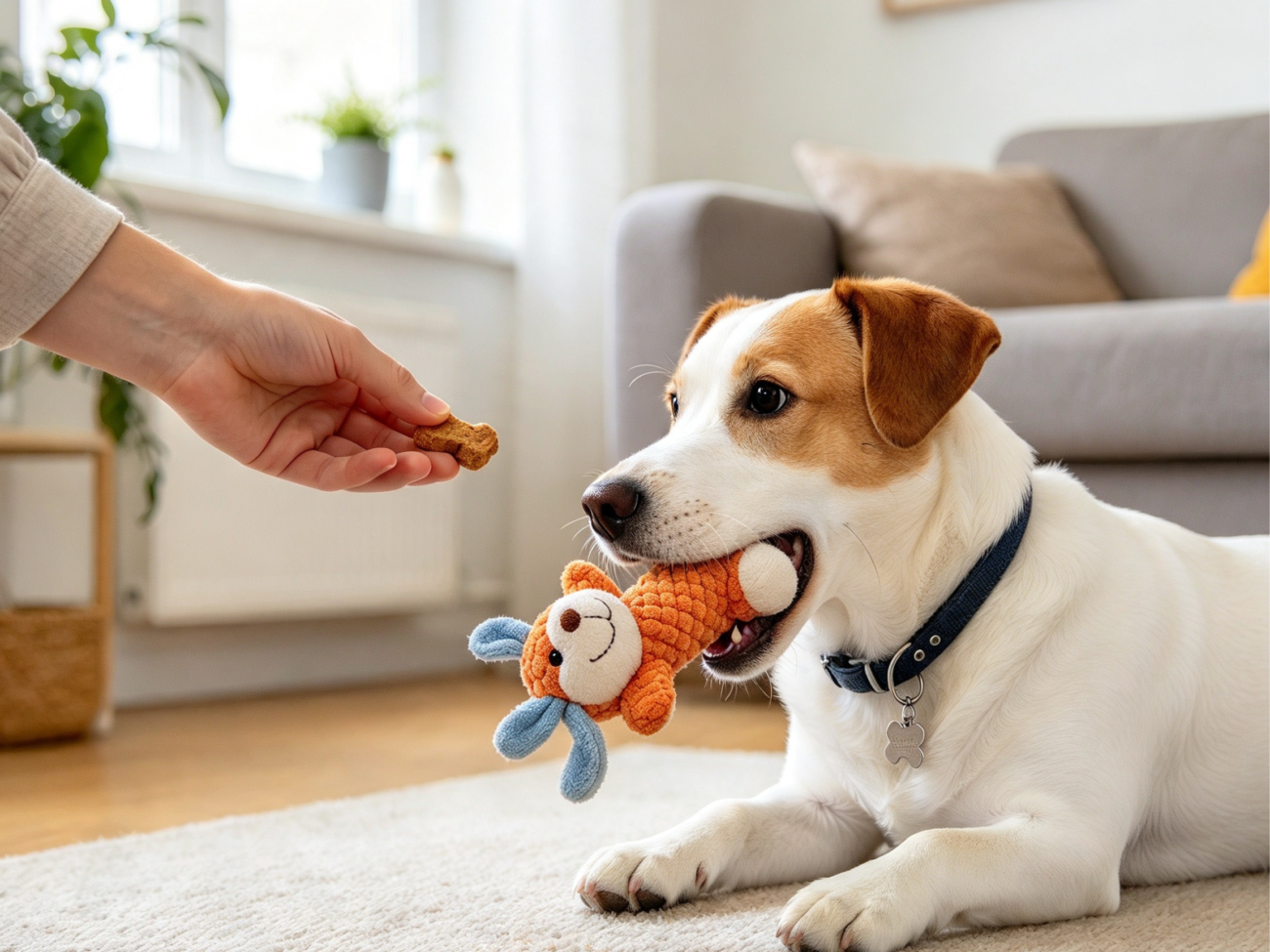
Every dog owner has been there: your dog grabs a sock, a chicken bone on the sidewalk, or something far worse, and you have seconds to react. “Drop it” and “leave it” are two of the most useful commands you can teach. They can prevent choking, poisoning, and expensive vet visits, and they make daily life far less stressful. The good news is that both are easy to teach with treats, patience, and a little practice. Here’s how.
What’s the Difference Between “Drop It” and “Leave It”?
The two commands sound similar, but they do different jobs.
- “Drop it” means “let go of what’s in your mouth right now.”
- “Leave it” means “don’t pick that up in the first place,” or “stop paying attention to that.”
Teach them separately, since they’re used in different situations. Together, they give you control before and after your dog gets hold of something they shouldn’t have.
Before You Start
A few basics will make training smoother.
- Use high-value treats. Small pieces of chicken, cheese, or soft training treats work best. Your dog needs to believe the trade is worth it.
- Keep sessions short. Five minutes is plenty. Stop while your dog is still eager.
- Start at home. Choose a quiet room with no distractions.
- Stay calm. Never chase your dog or snatch items away. This turns training into a game of keep-away, or worse, teaches your dog to guard things.
How to Teach “Drop It”
The easiest way to teach “drop it” is through a trade. Your dog learns that letting go leads to something even better.
- Give your dog a toy they like, but not their absolute favorite.
- Let them hold it for a few seconds, then bring a treat close to their nose.
- As they open their mouth to take the treat, the toy will fall out. Say “drop it” as it happens.
- Immediately say “Yes!” and give them the treat.
- Hand the toy back if it’s safe. This teaches your dog that giving something up doesn’t mean losing it forever.
- Repeat several times, then start saying “drop it” just before you offer the treat.
- Gradually practice with different toys and objects, moving to more exciting items over time.
Tip: Giving the toy back is important. If “drop it” always means the fun ends, your dog will be less willing to cooperate.
How to Teach “Leave It”
This command builds impulse control, and it’s the one that keeps your dog safe around hazards.
Step 1: Start with a closed hand
- Hold a treat in your closed fist and present it to your dog.
- Let them sniff, lick, or paw at your hand. Ignore all of it.
- The moment they pull away, even for a second, say “Yes!” and give them a different treat from your other hand.
- Repeat until your dog backs away from your fist as soon as you present it.
Step 2: Add the cue
Once your dog moves away reliably, say “leave it” just before presenting your fist. Reward when they back off.
Step 3: Use an open hand
Place a treat in your open palm. If your dog goes for it, close your hand. When they back away, reward them with a treat from the other hand.
Step 4: Put the treat on the floor
- Place a treat on the floor and cover it with your hand or foot if needed.
- Say “leave it.”
- When your dog looks away from the treat and up at you, reward them with a different treat.
- Gradually uncover the treat while your dog holds their focus on you.
Step 5: Practice in real life
Try it with dropped food, toys, and objects during walks. Start with low-value items and work your way up to more tempting ones.
Troubleshooting Common Problems
My dog won’t drop the item.
Your treat may not be exciting enough. Try something better, like a small piece of cooked chicken. Also make sure you’re offering the trade calmly, without grabbing.
My dog grabs the treat from my hand.
Go back a step and make the exercise easier. Keep your hand closed until your dog backs away completely, even for a split second.
My dog guards items and growls.
Stop the exercise immediately and don’t try to take the item away. Resource guarding can be serious. Contact a certified trainer or behaviorist for help.
My dog only listens indoors.
Dogs don’t automatically transfer skills to new places. Practice in the yard, on walks, and in different environments, always increasing difficulty gradually.
Common Mistakes to Avoid
- Chasing or grabbing. This makes your dog want to keep the item, or run.
- Shouting the command. Use a calm, clear voice. Yelling can startle your dog and make them gulp down what’s in their mouth.
- Punishing. If your dog is scolded for picking things up, they may start hiding items or swallowing them quickly.
- Skipping rewards. Reward often, especially at the beginning.
- Training only when there’s a real emergency. Practice regularly so the commands are reliable when it matters.
Safety Note
Some items can be dangerous even in small amounts, including chocolate, grapes, cooked bones, medications, and certain plants. If your dog swallows something harmful, contact your veterinarian or an emergency animal clinic right away. Training helps prevent these situations, but it never replaces supervision and a dog-proofed home.
Final Thoughts
“Drop it” and “leave it” are more than tricks. They’re everyday safety tools that give you peace of mind and help your dog make better choices. Keep training sessions fun, reward generously, and practice in new places over time. With patience and consistency, your dog will learn that giving something up or walking away leads to something even better.