Table of Contents
Learning how to brush your dog’s teeth is one of the most effective ways to ensure your pet’s long-term health and comfort. While dental care is often overlooked, most dogs show signs of periodontal disease by the time they are three years old. Preventing plaque buildup protects against severe infections, tooth loss, and costly veterinary procedures.
In this step-by-step guide, we will cover why oral hygiene matters, essential tools, safe brushing techniques, and daily habits to maintain a clean, healthy mouth.
For more pet care guides, check out our Senior Dog Care post, read about Flea and Tick Prevention, or browse our Dog Breeds section.
Quick Summary: Dental Care Routine & Tools
Understanding how to brush your dog’s teeth regularly prevents painful gum infections and long-term dental complications.
| Care Element | Recommended Frequency | Core Purpose |
|---|---|---|
| Toothbrushing | Daily (or 3x weekly) | Removes plaque before it hardens into tartar |
| Dog Toothpaste | Every Session | Enzymatic formula safe for swallowing |
| Dental Chews | Daily Supplemental | Mechanical plaque reduction via chewing |
| Vet Checkups | Once Annually | Professional exam & sub-gingival scaling |
Why Brushing Your Dog’s Teeth Matters
Plaque forms naturally on your dog’s teeth every day. If not brushed away, it hardens into tartar within 48 to 72 hours. Tartar cannot be removed with a toothbrush and requires professional scaling under anesthesia.
Key risks of unmanaged dental hygiene include:
- Severe Bad Breath: Persistent odor indicates active bacterial accumulation.
- Periodontal Disease: Red, swollen, or bleeding gums that damage the supporting bone structures.
- Systemic Health Issues: Oral bacteria can enter the bloodstream, potentially harming the heart, liver, and kidneys.
- Pain and Eating Difficulties: Dogs instinctively hide pain, often suffering quietly until teeth become loose.
To learn more about clinical health standards, consult resources at the American Veterinary Medical Association.
Tools You Need to Brush Your Dog’s Teeth
Gathering the right equipment makes the process safe and comfortable for your dog:
- Enzymatic Dog Toothpaste: Always use dog-specific paste (flavored in chicken, peanut butter, or beef). Never use human toothpaste, which contains toxic ingredients like xylitol and fluoride.
- Proper Toothbrush: Choose a double-headed canine toothbrush, a small puppy brush, or a soft finger brush.
- High-Value Treats: Use positive reinforcement to reward your pet after every training session.
7 Steps: How to Brush Your Dog’s Teeth Safely
Patience is key when establishing a dental routine. Move through these steps over several weeks to build confidence.
Step 1: Pick the Right Time
Choose a quiet moment when your dog is calm and relaxed, such as after a long walk or play session.
Step 2: Introduce the Flavor
Place a tiny drop of enzymatic paste on your finger and let your dog lick it off to build a positive association.
Step 3: Desensitize the Gums
Gently lift your dog’s upper lip and massage their gums with your finger for a few seconds, followed immediately by praise.
Step 4: Introduce the Brush
Apply toothpaste to the brush bristles, letting your dog sniff and lick it while keeping the tool still.
Step 5: Focus on the Outer Teeth
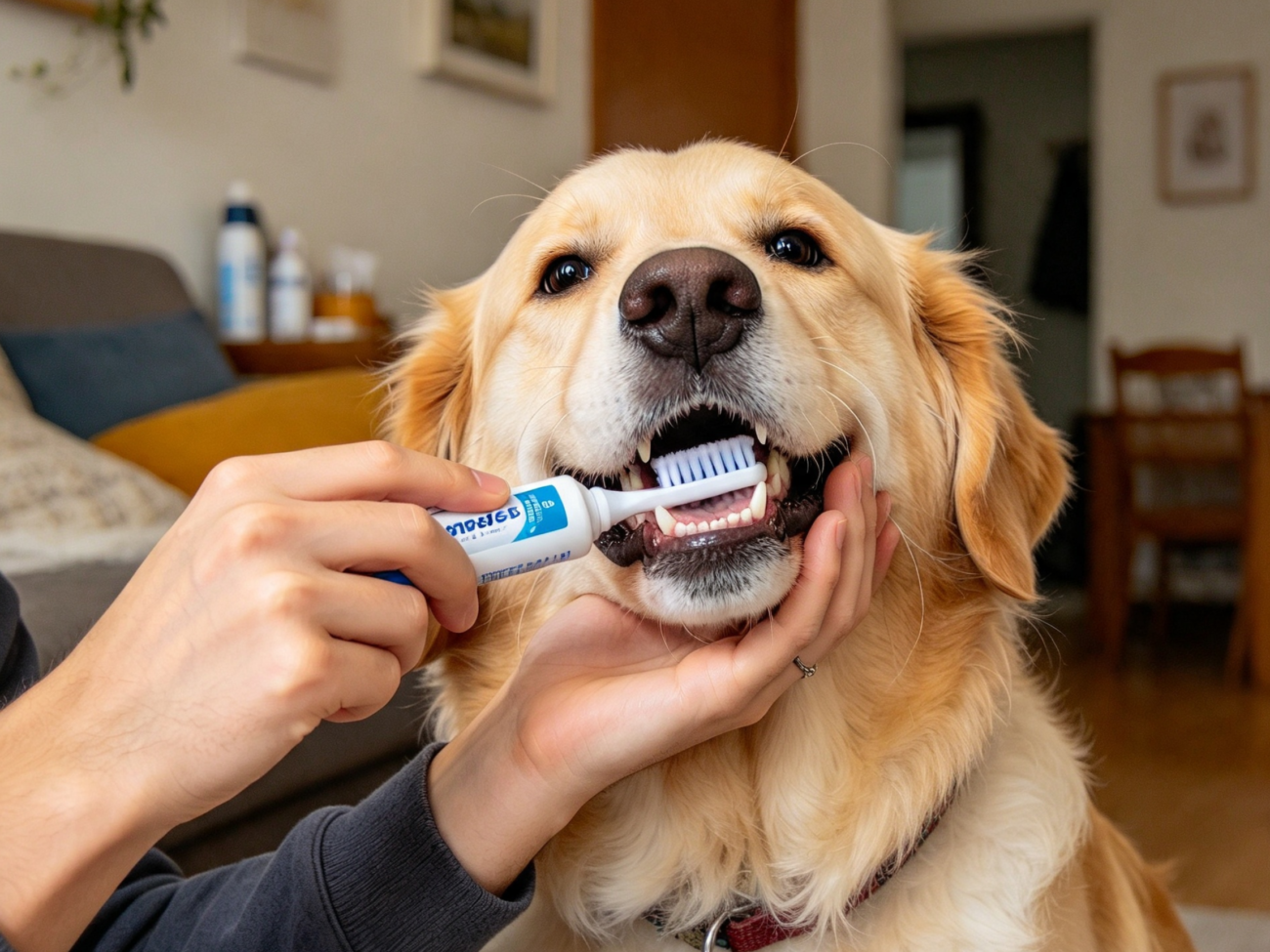
Angle the bristles at 45 degrees toward the gumline. Use gentle, circular motions on the outer tooth surfaces where plaque accumulates fastest.
Step 6: Target the Back Molars
Gently slip the brush inside the cheek pouch to clean the large upper molars and canine teeth without forcing the mouth wide open.
Step 7: Reward and Build Duration
As you master how to brush your dog’s teeth, gradually increase the duration to 30–60 seconds per side, ending every session with enthusiasm, praise, or a favorite treat.
Alternative Dental Hygiene Options
If learning how to brush your dog’s teeth is taking longer than expected, these supplemental dental options can help in the meantime:
- VOHC-approved (Veterinary Oral Health Council) dental chews.
- Medicated dental wipes for gentle surface cleaning.
- Vet-recommended water additives or oral hygiene gels.
- Safe rubber chew toys designed to scrape teeth naturally.
Avoid extremely hard items like natural bones, antlers, or hard nylon toys, as they frequently cause tooth fractures.
Signs of Dental Disease to Watch For
Schedule a veterinary exam immediately if you spot any of these warning signs:
- Yellow or dark brown tartar buildup near the gumline
- Bleeding, bright red, or receded gums
- Excessive drooling or pawing at the mouth
- Difficulty chewing, dropping kibble, or eating on one side
Protect Your Pet’s Smile
Knowing how to brush your dog’s teeth provides long-term protection against painful infections and expensive medical treatments. By taking a slow, positive approach, you can easily turn dental care into a rewarding part of your weekly routine.