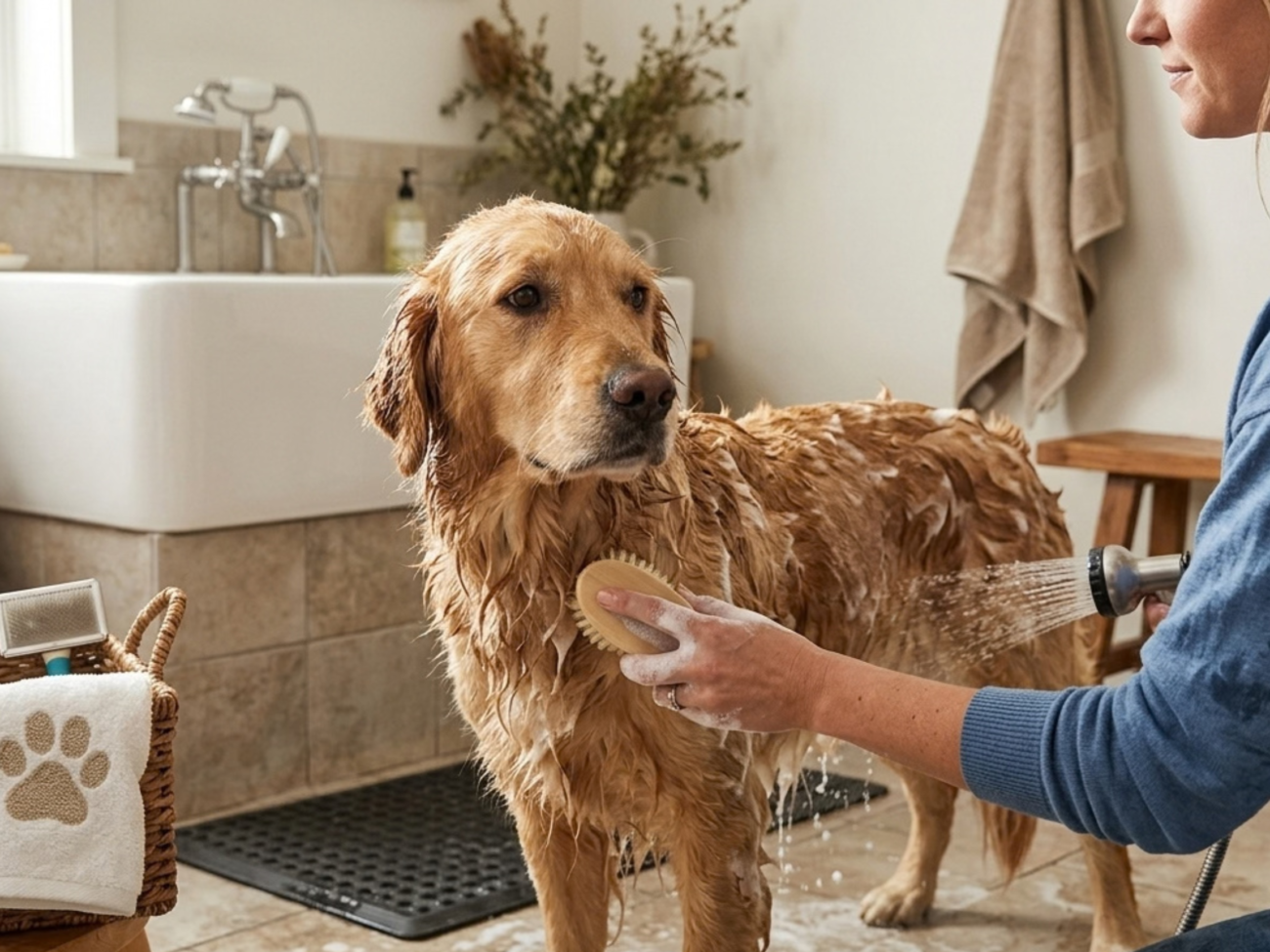
Understanding how often should you bathe your dog is essential for maintaining a healthy skin barrier and a shiny coat. While some dog owners wash their pets weekly, others go months without a single bath. Finding the ideal bathing schedule depends on your dog’s coat type, activity level, and specific skin health needs.
Bathe too infrequently, and dirt and bacteria build up. Bathe too often, and you risk stripping away essential natural oils. In this guide, we cover optimal bathing frequencies, step-by-step washing techniques, and tips to keep your pup clean between baths.
For more pet care guides, check out our articles on Senior Dog Care, Flea and Tick Prevention, or browse our Dog Breeds section.
Quick Summary: Bathing Frequency by Coat Type
Determining how often should you bathe your dog starts with identifying their coat type and daily routine.
| Coat Type / Category | Ideal Bathing Frequency | Key Care Requirements |
|---|---|---|
| Short / Smooth Coats | Every 1 to 2 Months | Wipe down after muddy outdoor walks |
| Double Coats | Every 2 to 3 Months | Regular brushing; avoid overbathing to protect insulation |
| Long / Curly Coats | Every 3 to 6 Weeks | Frequent brushing to prevent mats and tangles |
| Hairless Breeds | Weekly to Bi-Weekly | Gentle bathing to prevent skin oil buildup |
| Skin Folds (Wrinkly) | Every 3 to 4 Weeks | Daily cleaning of moisture in facial and body folds |
How Often Should You Bathe Your Dog: Key Factors
Several lifestyle and physical characteristics influence your pet’s ideal hygiene routine:
- Coat Type: Long, curly hair traps dirt easily, whereas short coats stay clean much longer.
- Activity Level: Dogs that swim, dig, or roll in mud need more frequent baths than indoor lap dogs.
- Skin Health and Allergies: Dogs with sensitive skin or allergies require specialized schedules and medicated shampoos prescribed by a vet.
- Age and Life Stage: Puppies and senior dogs have delicate skin and need gentle formulas and less frequent washing.
To review clinical dermatological guidelines, refer to resources at the American Veterinary Medical Association.
Signs Your Dog Needs a Bath Right Away
Instead of strictly sticking to a calendar, watch for these physical signs indicating it is time for a wash:
- Persistent odor that brushing does not eliminate
- Visible dirt, mud, or sticky substances embedded in the fur
- Greasy or oily texture on the coat
- Matting or tangles that need softening with conditioner
- Contact with foul-smelling items like garbage or stagnant water
Risks of Overbathing vs. Underbathing
Finding the right balance protects your dog’s dermatological health.
Consequences of Bathing Too Frequently
Overbathing strips away the skin’s protective lipid barrier, leading to:
- Dry, flaky, and itchy skin
- Increased susceptibility to bacterial or yeast infections
- A dull, brittle, and damaged coat
Consequences of Skipping Baths
Neglecting hygiene for too long leads to:
- Unpleasant body odor and heavy debris accumulation
- Severe fur matting that pulls tightly on the skin
- Parasites hiding undetected inside a dirty coat
7 Steps: How to Bathe Your Dog Safely
Follow this step-by-step process to make bath time safe, effective, and stress-free:
Step 1: Brush Before Wetting the Coat
Thoroughly brush your dog before bath time. Water tightens existing mats, making them nearly impossible to remove afterward.
Step 2: Set the Water to Lukewarm
Always use lukewarm water. Hot water damages delicate skin, while cold water causes unnecessary stress and discomfort.
Step 3: Choose a Dog-Specific Shampoo
Never use human shampoo. Dogs have a different skin pH balance, and human products cause severe dryness. Select a mild, pH-balanced canine shampoo.
Step 4: Wet, Lather, and Massage
Work from the neck backward, massaging the lather deep into the coat while avoiding the eyes, ears, and nostrils.
Step 5: Rinse Completely
Rinse thoroughly until the water runs crystal clear. Leftover soap residue is the leading cause of post-bath itching and irritation.
Step 6: Dry Thoroughly
Towel dry gently. If using a blow dryer, keep it on a low, cool setting, making sure to dry moisture between toes and within skin folds.
Step 7: Reward with Treats and Praise
Always end bath time with positive reinforcement, treats, and enthusiasm to build a positive routine.
Simple Tips to Keep Your Dog Clean Between Baths
When determining how often should you bathe your dog, simple daily habits can significantly extend the time between full wash sessions:
- Brush Daily: Brushing removes loose debris and distributes natural coat oils.
- Use Pet-Safe Wipes: Wipe down paws and underbellies after rainy walks.
- Maintain Clean Bedding: Wash your dog’s blankets and bed covers regularly.
- Try Canine Dry Shampoo: Use waterless foam or dry shampoo for quick spot cleaning.
Protect Your Dog’s Skin and Coat
Knowing how often should you bathe your dog allows you to maintain optimal hygiene without causing skin irritation. By observing your dog’s coat type, daily activity, and individual health needs, you can easily establish a routine that keeps your companion clean, comfortable, and happy.