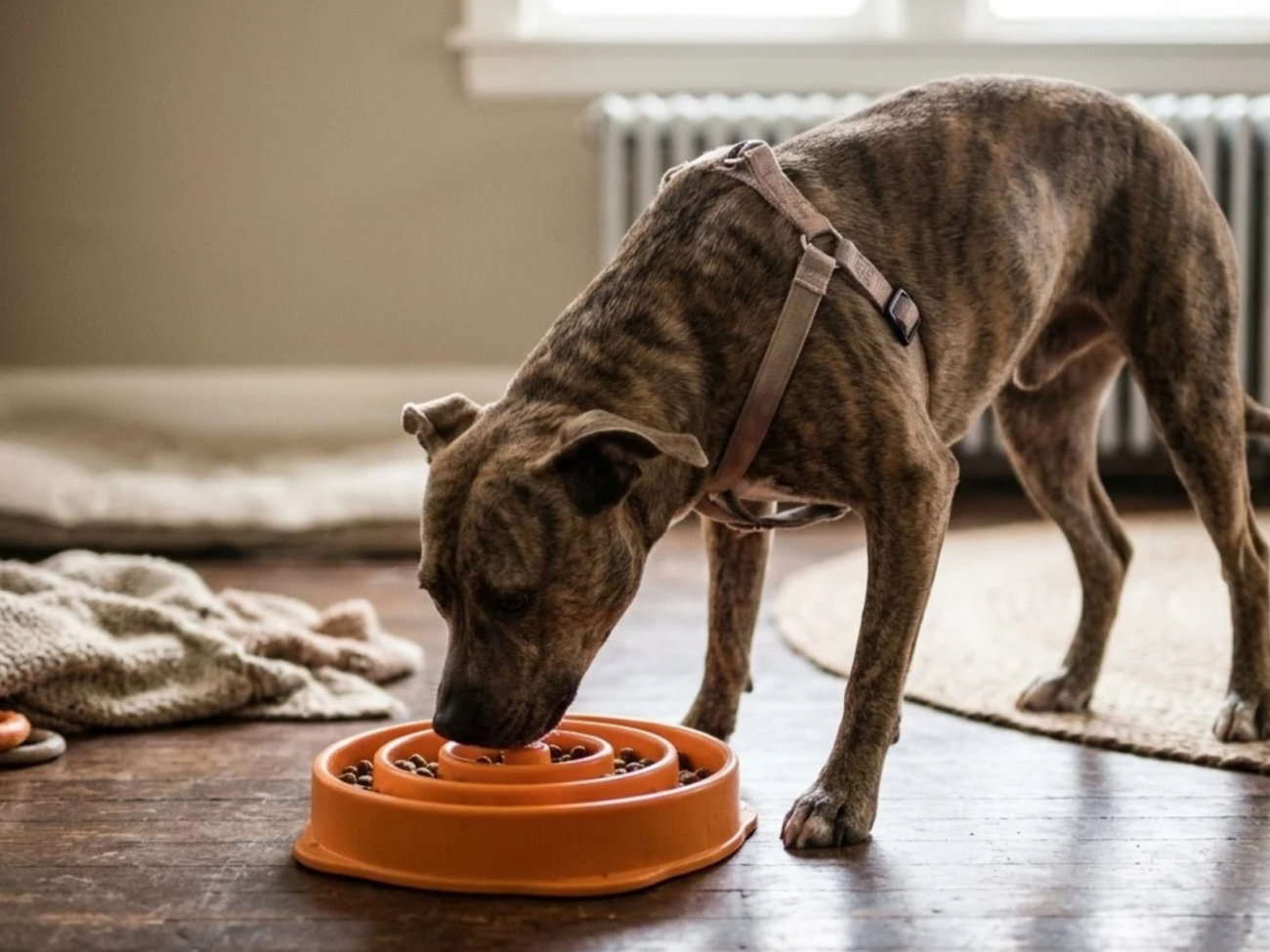
For many pet owners, mealtime is a simple, joyful routine. However, for an adopted or shelter pup, the sound of kibble hitting a bowl can trigger intense stress. Understanding and resolving dog food anxiety is essential to help your companion feel truly safe and secure in their new home.
If your dog inhales their meal in seconds, growls when you walk past their bowl, or hides kibble under couch cushions, you are dealing with a deeply rooted survival instinct. Fortunately, with patience and positive reinforcement, you can ease mealtime stress for good.
Table of Contents
What Causes Dog Food Anxiety?
Unlike simple greediness, dog food anxiety is a behavioral response typically rooted in past scarcity, fierce street competition, or crowded shelter environments. To a dog who has experienced hunger, every meal feels like it could be their last.
According to canine behaviorists at the American Kennel Club (AKC), dogs with a history of malnutrition often retain protective eating habits long after entering a loving, stable household.
3 Tell-Tale Signs of Mealtime Stress
- Frantic, rapid eating: Your dog gulps food without chewing, increasing the risk of choking or dangerous bloat.
- Resource guarding: Stiff body posture, whale eye, or low growling when a human or another pet approaches their bowl.
This is a common effect of food-related anxiety. - Compulsive food hoarding: Carrying mouthfuls of kibble to bury in blankets, beds, or corners of the house.
How to Treat Dog Food Anxiety at Mealtime: 4 Simple Steps
1. Use Slow-Feeder Bowls and Puzzle Toys for Dog Food Anxiety
Slowing down the pace of eating sends a calming signal to your dog’s brain that food is abundant and safe. Mental enrichment is a great tool. Explore more ideas in our guide on 5 Simple Ways to Keep Your Dog Mentally Stimulated at Home.
2. Feed in a Quiet, Isolated Space
In multi-pet households, a dog with dog food anxiety needs a private dining zone—such as a separate room or behind a baby gate—so they never feel pressured to defend their meal. Building calm foundational focus also helps; review our steps on How to Teach Dog to Sit Stay Lie Down.
3. Practice High-Value “Trading”
Teach your pup that a human approaching their bowl predicts a bonus, not a threat. While they eat, calmly walk by at a safe distance and toss a piece of boiled chicken near their bowl, then walk away. Over time, this anxiety fades as they associate your presence with extra rewards.
4. Stick to a Strict Feeding Schedule
Unpredictability fuels stress. Serving meals at the exact same times every morning and evening builds deep trust and directly helps with dog food anxiety. If your pup also shows panic when left alone, check out our tips on Dog Separation Anxiety.
Final Thoughts: Overcoming Dog Food Anxiety
Helping a rescue pet overcome dog food anxiety takes genuine empathy, daily consistency, and plenty of patience. Remember that your dog is not trying to be stubborn or dominant—they are simply reacting to past memories of hunger and insecurity.
By setting up a peaceful feeding zone, slowing down their meals with puzzle feeders, and proving every single day that their bowl is completely safe and abundant, you will gradually replace mealtime tension with deep, lasting trust. Stick to your calm routine, celebrate the small milestones, and watch your companion finally relax and enjoy every meal in their forever home!