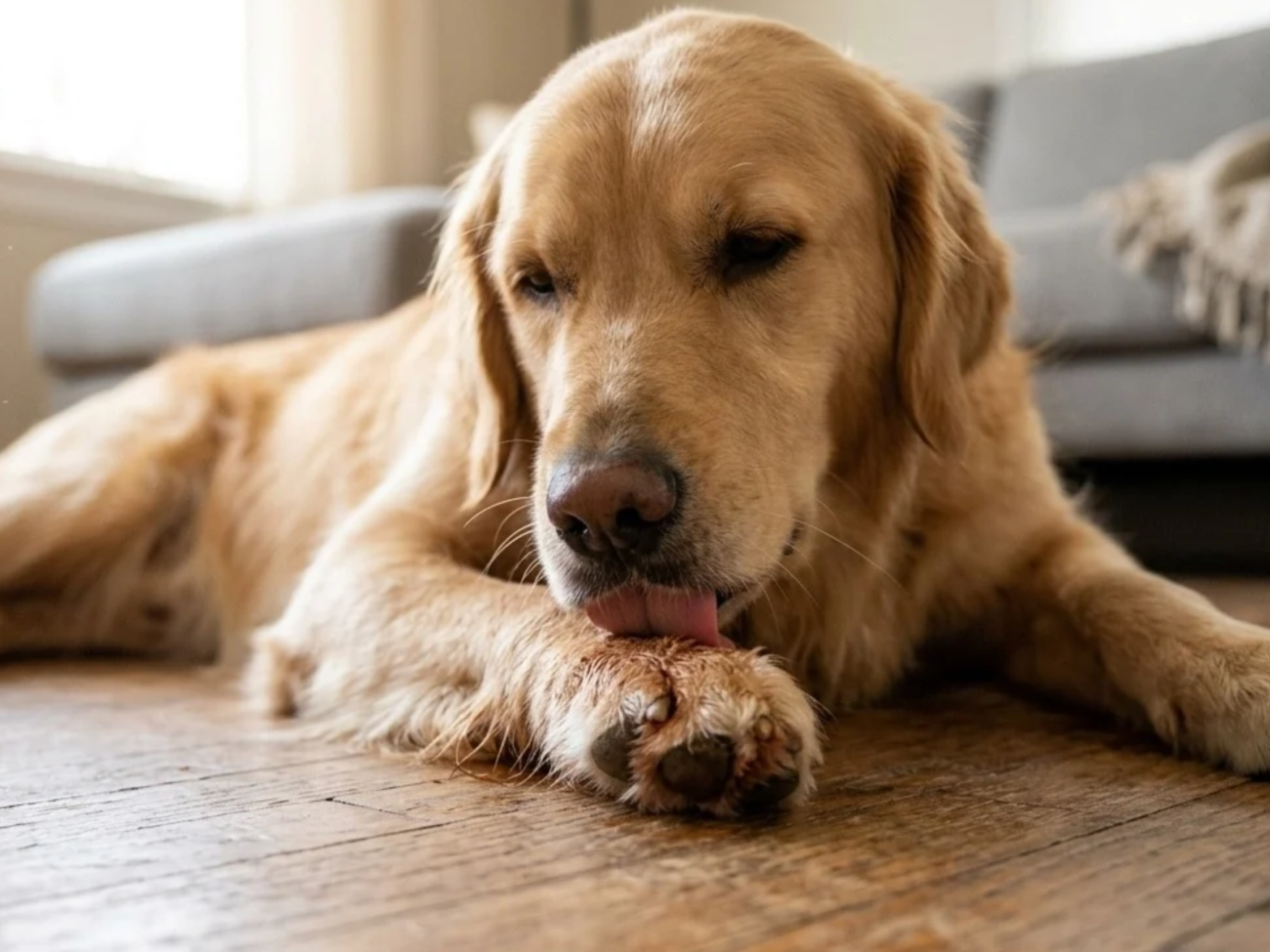
Seeing your pup give their feet a quick bath after a muddy walk is completely normal. However, when you notice your dog licking paws obsessively for hours—leaving the fur stained reddish-brown or the skin red and raw—it is a clear sign of underlying discomfort or stress.
Because canines cannot tell us when something itches or hurts, persistent grooming is their primary way of soothing themselves. Understanding why a dog licking paws happens is the first step toward giving your companion fast, lasting relief.
Table of Contents
5 Common Reasons for a Dog Licking Paws Excessively
Before trying any remedy, inspect the pads and the webbing between your pup’s toes to identify the root trigger. According to veterinary experts at the American Kennel Club (AKC), chronic paw chewing almost always stems from one of these five issues:
1. Environmental and Seasonal Allergies
Just like humans sneeze from pollen, dogs absorb allergens—such as grass, dust mites, and mold—directly through the skin on their feet. Walking outside triggers an intense histamine reaction, resulting in a dog licking paws immediately after coming indoors.
2. Dry, Cracked Paw Pads
Hot pavement in summer, de-icing salt in winter, or dry indoor air can strip moisture from tough paw pads. Small micro-cracks sting and itch, prompting your pup to lick constantly to soothe the irritation.
3. Trapped Debris, Thorns, or Ticks
A tiny burr, splinter, pebble, or hidden tick lodged between the toes causes sharp, localized discomfort. Always check closely between every toe pad if the licking started suddenly on just one foot.
4. Yeast or Bacterial Infections
Constant moisture from saliva creates a warm, damp environment where yeast and bacteria thrive. If your pup’s paws smell faintly like corn chips or look swollen between the toes, a secondary skin infection may be driving the cycle.
5. Boredom, Stress, or Separation Anxiety
Not every case is physical. Repetitive licking releases calming endorphins in a canine’s brain. Dogs left alone for long stretches often develop self-soothing habits; if your pup struggles when home alone, review our tips on Dog Separation Anxiety.
Quick Comparison: Normal Grooming vs. Problematic Paw Licking
| Observation | Normal Self-Grooming | Excessive Paw Licking |
|---|---|---|
| Frequency | A few minutes after walks or meals | Repeatedly throughout the day and night |
| Fur appearance | Clean, dry, natural coat color | Rusty saliva stains, wet or matted fur |
| Skin condition | Smooth, intact, odor-free pads | Redness, swelling, hair loss, or yeasty odor |
4 Safe Home Remedies to Soothe Irritated Paws
1. Wipe Paws Gently After Every Walk
Keep fragrance-free pet wipes or a damp microfiber cloth by the front door. Wiping away grass pollen, dust, and sidewalk chemicals right after outdoor walks dramatically reduces allergic flare-ups in a dog licking paws.
2. Offer a Soothing Oatmeal Paw Soak
Fill a shallow basin with lukewarm water and plain, unsweetened colloidal oatmeal. Let your pup stand in the soothing bath for 5 to 10 minutes, then pat their feet completely dry with a clean towel—paying special attention to the spaces between the toes.
3. Apply a Dog-Safe Paw Balm
Moisturize dry or rough pads using a natural, lick-safe balm made with shea butter, coconut oil, or beeswax. Regular hydration protects the skin barrier and pairs well with a consistent grooming routine—just like the coat care steps in our guide on How to Groom a West Highland White Terrier at Home.
4. Redirect Boredom with Mental Enrichment
If medical causes are ruled out, break the habit by giving your pup’s brain a satisfying job to do. Stuffed Kongs, lick mats, and puzzle feeders satisfy the urge to lick in a healthy way. Explore more easy ideas in our post on 5 Simple Ways to Keep Your Dog Mentally Stimulated at Home.
When to Visit Your Veterinarian
While mild irritation responds well to gentle home care, schedule a vet checkup if you notice bleeding, limping, open sores, oozing fluid, or a strong foul odor. Your veterinarian can prescribe targeted medicated wipes or allergy relief to break the itch-lick cycle safely.
Final Thoughts on Managing a Dog Licking Paws
Spotting a dog licking paws repeatedly is your cue to look closer at their daily environment, skin hydration, and mental stimulation. By wiping away allergens after walks, moisturizing dry pads, and keeping their mind engaged, you can protect your pup’s sensitive feet and restore their comfort fast!