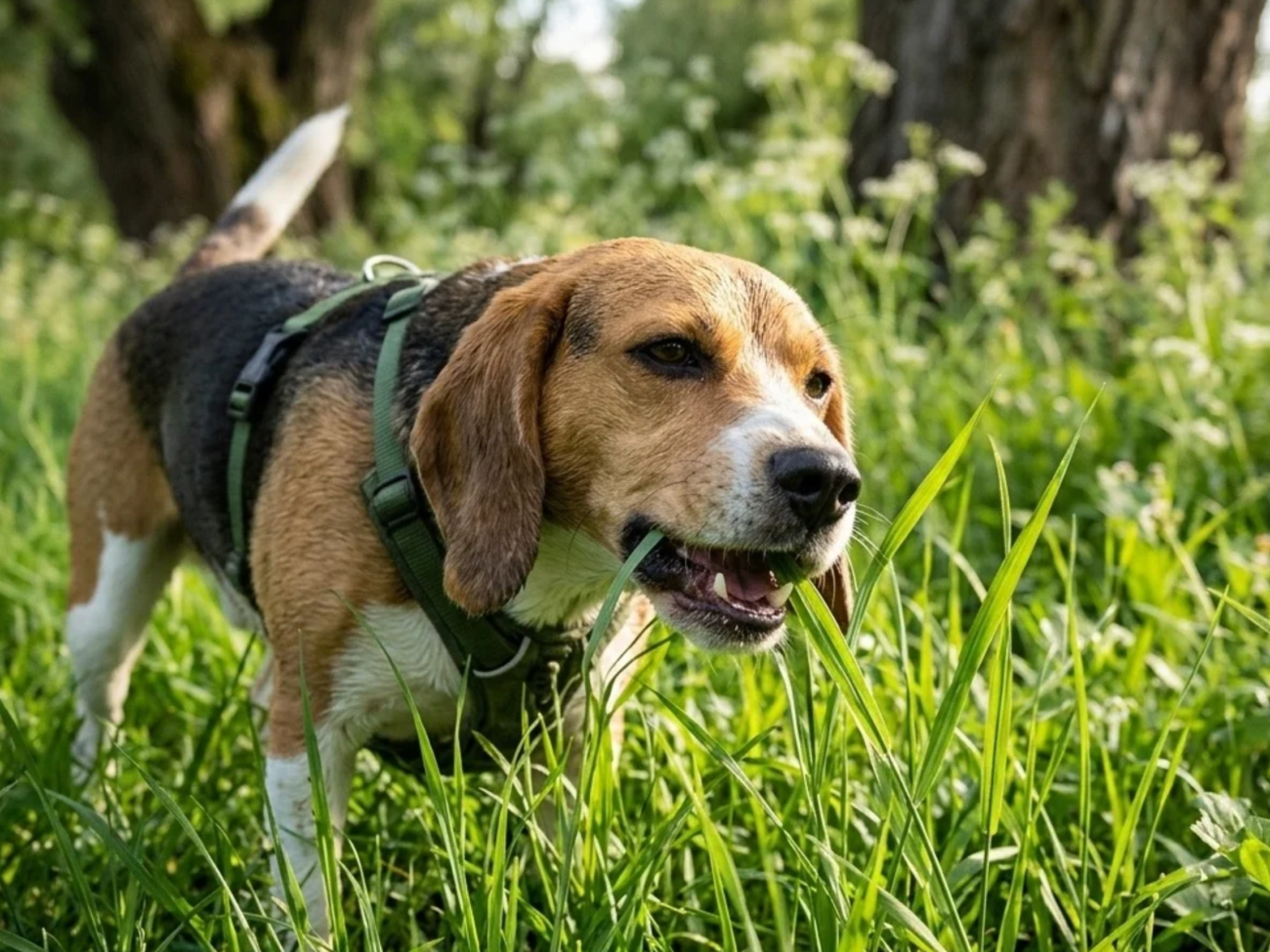
Whether you are out on a morning stroll or watching your pup in the backyard, seeing them graze like a tiny cow is a very common sight. Asking why do dogs eat grass and when to worry is one of the top questions pet owners bring to veterinarians—and the answer is usually much simpler than most people think.
While many assume a pup only nibbles on greenery when they have an upset stomach, canine behaviorists have found several everyday triggers behind this instinct. Understanding why do dogs eat grass and when to worry helps you keep your furry friend safe during outdoor walks.
Table of Contents
6 Real Reasons Why Do Dogs Eat Grass and When to Worry
Before rushing to stop every nibble, look at your pup’s overall mood, appetite, and energy levels. According to veterinary experts at the American Kennel Club (AKC), fewer than 25 percent of dogs actually vomit after grazing, proving that stomach trouble is rarely the main cause.
1. Natural Dietary Fiber and Digestion Support
Wild canines historically consumed whole prey—including the stomach contents of plant-eating animals—to get roughage. Today, modern pups may instinctively seek out blades of grass to add extra fiber to their diet and keep their digestive tract moving smoothly.
2. Boredom and Lack of Mental Stimulation
If your pup is left alone in the yard without toys or interactive activities, grazing quickly becomes an easy way to pass the time. Giving your companion engaging indoor and outdoor tasks prevents boredom habits; explore effortless enrichment ideas in our guide on 5 Simple Ways to Keep Your Dog Mentally Stimulated at Home.
3. They Simply Like the Taste and Texture
Fresh spring grass is cool, slightly sweet, and crunchy. Many dogs treat tender green shoots just like a refreshing salad snack, especially early in the morning when the blades are covered in dew.
4. Soothing Mild Stomach Discomfort
Sometimes, a pup with mild acid reflux or trapped gas will eat grass quickly without chewing. The long blades tickle the throat and stomach lining, triggering a natural reflex to vomit and relieve temporary nausea.
5. Stress or Self-Soothing Behavior
Just like repetitive paw licking, repetitive grazing can release calming endorphins when a dog feels anxious or overwhelmed. If your pup struggles with nervousness when left alone, check out our practical advice on Dog Separation Anxiety.
6. Nutritional Gaps or Hunger Between Meals
If your pup eats early in the evening and goes a long stretch until breakfast, an empty stomach can trigger mild morning biliousness. Splitting their daily kibble into smaller, well-timed portions often stops early-morning grazing.
Quick Comparison: Harmless Grazing vs. Warning Signs
| Observation | Normal, Safe Grazing | Time to Call the Vet |
|---|---|---|
| Eating pace | Calm, selective nibbling on fresh blades | Frantic, desperate gulping of grass and dirt |
| After eating | Acts happy, energetic, and eats regular meals | Repeated vomiting, lethargy, or loss of appetite |
| Lawn safety | Untreated, pesticide-free grass | Areas sprayed with fertilizers or weed killers |
3 Simple Ways to Keep Your Grass-Eating Dog Safe
1. Keep Your Lawn Chemical-Free
Herbicides, chemical fertilizers, and slug pellets are highly toxic to canines. Stick to pet-safe lawn care products at home, and steer your pup away from heavily manicured public parks or roadside strips that may have been sprayed.
2. Redirect with Healthy Crunchy Treats
Once you understand why do dogs eat grass and when to worry, you can easily curb the habit by bringing along crunchy, dog-safe veggies like cucumber slices, baby carrots, or green beans on walks. Rewarding your pup for walking away from grass reinforces reliable leash manners; review our foundational steps in How to Teach Dog to Sit Stay Lie Down.
3. Grow a Safe Indoor Pet Grass Patch
If your pup genuinely loves the texture of greenery, buy a small planter of organic wheatgrass or oat grass specifically grown for pets. This gives them a safe, clean spot to nibble without exposing them to parasites or garden chemicals.
Why Do Dogs Eat Grass and When to Worry: Vet Warning Signs
Knowing why do dogs eat grass and when to worry becomes critical if your pup eats greenery frantically every day, vomits repeatedly, has diarrhea, or shows sudden weight loss. Your vet can rule out gastrointestinal inflammation, intestinal parasites, or dietary imbalances.
Final Thoughts on Why Do Dogs Eat Grass
Figuring out why do dogs eat grass and when to worry comes down to observing your companion’s routine, diet, and environment. As long as your pup is energetic, eating their regular food normally, and grazing only on untreated lawns, a few nibbles of green grass are nothing to worry about!