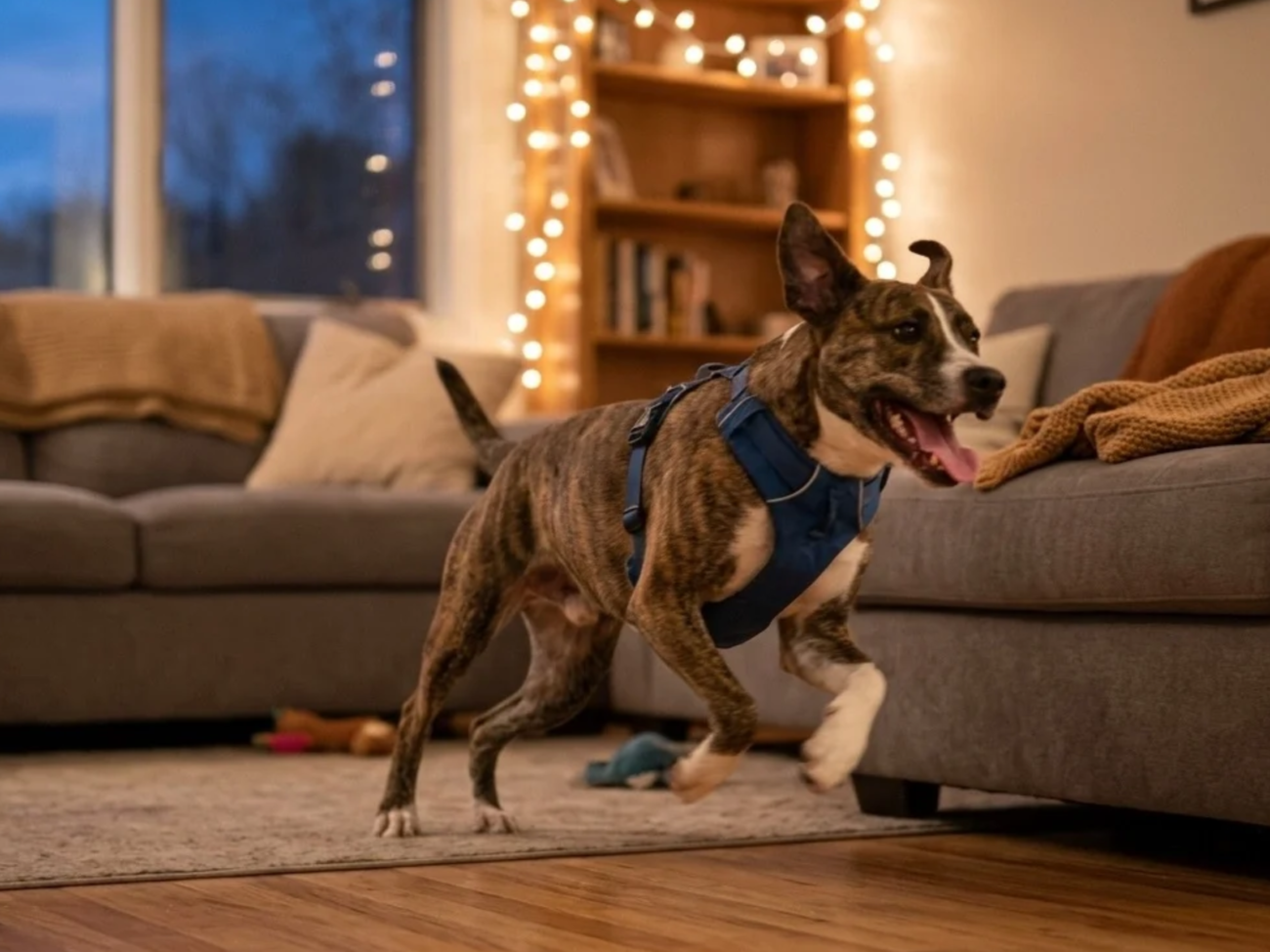
Just as you are ready to relax on the couch for the night, your pup suddenly transforms into a blur of fur—sprinting from room to room, spinning in circles, and leaping over cushions. Experiencing dog evening zoomies is one of the most common yet puzzling behaviors for pet parents.
Scientifically known as Frenetic Random Activity Periods (FRAPs), dog evening zoomies are completely normal bursts of pent-up energy. However, when they happen every single night right before bedtime, knowing how to channel that excitement helps restore peace to your home.
Table of Contents
Why Do Dog Evening Zoomies Happen?
Unlike bad behavior or disobedience, sudden nighttime sprints are a natural release valve for your canine’s nervous system. According to veterinary behavior experts at the American Kennel Club (AKC), these energetic outbursts typically occur when a dog hits an emotional or physical tipping point.
1. Built-Up Physical and Mental Energy
If your dog spent most of the day resting while you worked, their unspent energy naturally spills over once the household becomes active in the evening.
2. Overtiredness and Overstimulation
Just like human toddlers, puppies and young dogs often become hyperactive when they are exhausted. Instead of lying down to sleep, their tired brains trigger dog evening zoomies to fight off fatigue.
3. Relief After Bath Time or Potty Breaks
A sudden drop in physical tension—such as drying off after a bath or finishing a bathroom break—frequently sparks an immediate celebratory sprint across the living room.
Quick Comparison: Normal Zoomies vs. Stress Hyperactivity
| Sign | Healthy Evening Zoomies | Stress-Induced Hyperactivity |
|---|---|---|
| Body language | Loose, bouncy, play-bows, relaxed mouth | Tense muscles, wide eyes, frantic pacing |
| Duration | Short bursts lasting 2 to 5 minutes | Continuous restlessness lasting over 20 minutes |
| Response to calm cues | Settles quickly once the burst finishes | Struggles to lie down or stop panting |
How to Manage Dog Evening Zoomies: 4 Simple Steps
1. Add a 15-Minute Brain Game Before Dinner
Physical walks alone rarely tire out an active mind. Offering a lick mat, a snuffle mat, or scent work an hour before bedtime drains mental energy smoothly. Discover more effortless enrichment ideas in our guide on 5 Simple Ways to Keep Your Dog Mentally Stimulated at Home.
2. Avoid Chasing or Roughhousing During a Burst
When dog evening zoomies start, chasing your pup or shouting turns the sprint into an exciting game of tag. Instead, stay completely still, keep your voice low, and let them safely burn off the burst in a clear space.
3. Practice Calm Transition Cues
Once the sprinting slows down, redirect your pup’s focus using gentle, familiar obedience commands paired with low-value kibble. Reinforce calm focus by reviewing our step-by-step tutorial on How to Teach Dog to Sit Stay Lie Down.
4. Create a Predictable Wind-Down Routine
Dimming the lights, putting away squeaky toys, and guiding your pup to a cozy resting spot signals that playtime is over for the night. If your pup struggles to settle in their bed at night, check out our full walkthrough on How to Crate Train Your Puppy Without Stress.
Common Mistakes to Avoid
- Scolding your pup mid-sprint: Punishment creates confusion and anxiety, which actually triggers more frequent dog evening zoomies later on.
- Leaving slippery rugs unsecured: Hardwood floors and loose throw rugs increase the risk of pulled muscles during sharp turns.
- Waiting until bedtime for all exercise: Spreading activity into short afternoon and early-evening sessions prevents a massive energy spike at night.
Final Thoughts: Embracing and Guiding Dog Evening Zoomies
Seeing your furry friend dart joyfully around the house is a sign of a happy, spirited companion. While dog evening zoomies can catch you off guard at the end of a long day, a consistent wind-down routine and a bit of evening brain work will help your pup transition smoothly from playful sprints to peaceful sleep!