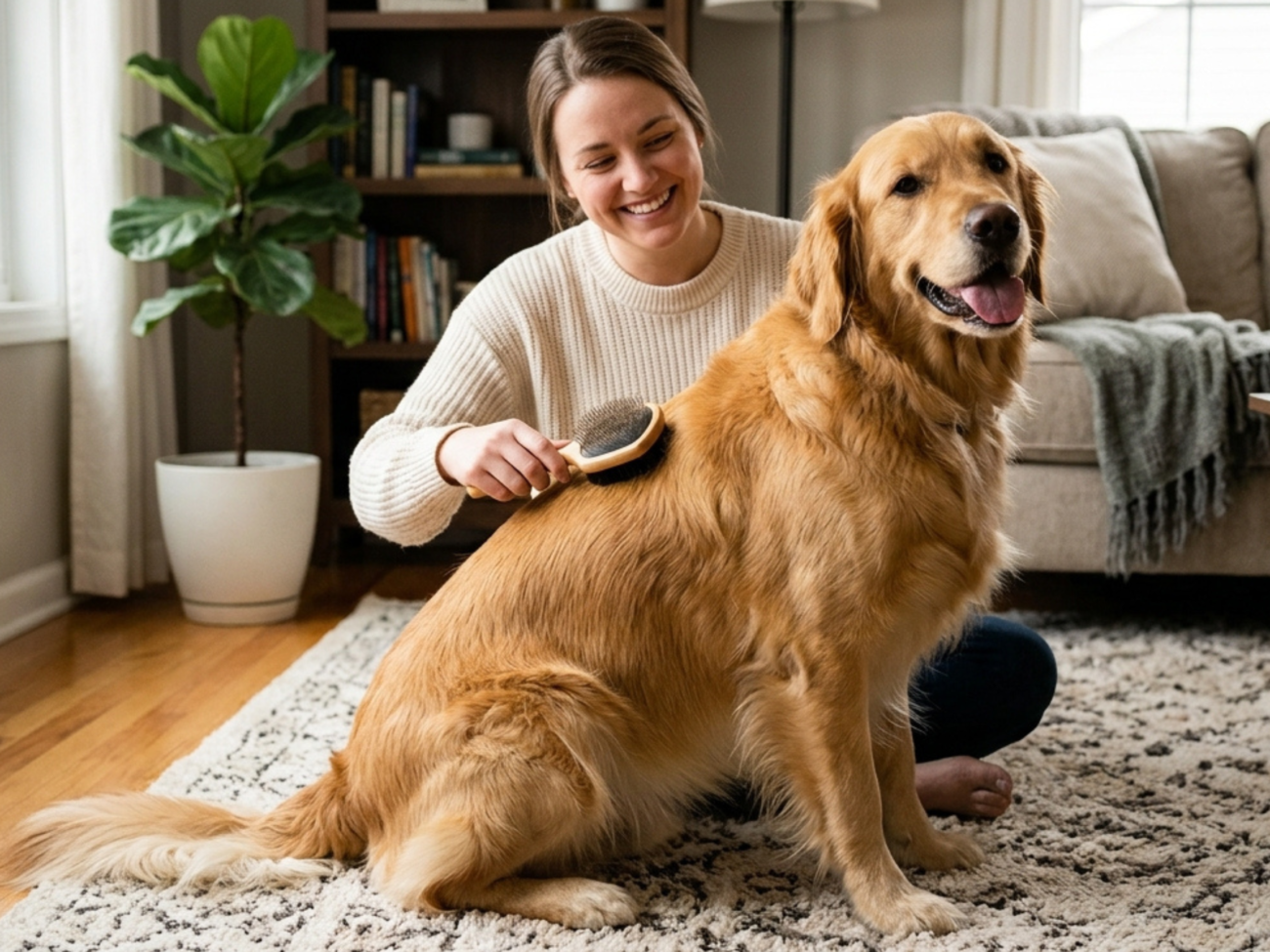
How often should you brush your dog to keep their coat clean, shiny, and tangle-free? Routine grooming is one of the simplest yet most effective habits you can establish to support your companion’s hygiene and overall health. Beyond removing loose fur, regular grooming prevents painful matting, reduces excess shedding around your home, and promotes healthy skin. Does your living room often end up covered in loose pet hair during seasonal transitions?
In this ultimate pillar guide, you will learn exactly how often should you brush your dog based on their coat type, essential tools for every fur texture, and 5 simple steps to establish a comfortable home grooming routine.
Table of Contents
How Often Should You Brush Your Dog Based on Coat Type?
If you are wondering how often should you brush your dog, the answer depends primarily on your dog’s unique fur length, density, and hair texture. Understanding these differences ensures you maintain a healthy coat without causing skin irritation:
- Long-Haired Coats (e.g., Golden Retrievers, Poodles): Knowing how often should you brush your dog with long fur is simple—they require daily brushing to prevent severe mats, tangles, and trapped debris.
- Double-Coated Breeds (e.g., Huskies, German Shepherds): Require thorough brushing 2 to 3 times per week, increasing to daily sessions during heavy seasonal shedding periods in spring and fall.
- Short-Haired Breeds (e.g., Beagles, Boxers): Benefit from brushing once a week to gently remove dead hair, clear loose dander, and distribute natural skin oils.
- Wire-Haired or Curly Coats: Require dedicated grooming 2 to 3 times per week using specialized slicker or pin brushes to preserve natural coat structure.
According to veterinary experts at PetMD, establishing a calm brushing routine early helps your dog become comfortable with routine handling while keeping their skin in optimal condition.
5 Simple Steps for Stress-Free Dog Brushing
Step 1: Select the Right Brush for Your Dog’s Specific Coat
Using the correct grooming tool makes a massive difference in your dog’s overall comfort. Slicker brushes work best for dense, double, or curly fur; pin brushes suit medium to long coats; and soft rubber curry brushes are ideal for short-coated breeds.
Step 2: Introduce Grooming Tools Gradually with Positive Rewards
If your dog shows anxiety around grooming tools, let them sniff and inspect the brush before starting. Offer enthusiastic verbal praise and high-value treats to build a positive association. Keeping a batch of delicious homemade healthy dog treats nearby helps your pup stay relaxed and cooperative throughout the session.
Step 3: Always Brush in the Direction of Natural Hair Growth
Always stroke gently following the natural direction of your dog’s fur growth. Avoid pushing down hard against the skin to prevent friction burns or irritation. Work in small, organized sections, starting from the shoulders and moving smoothly down toward the tail and legs.
Step 4: Work Out Tangles Gently Before Bath Time
Never bathe a dog with existing mats or deep tangles, as water causes knots to tighten significantly, making them extremely difficult to remove. Carefully loosen small knots using your fingers or a specialized detangling spray prior to washing. If your dog becomes energetic during grooming, schedule sessions immediately after a relaxing outdoor exercise—such as an enriching sniffari for dogs—when they are naturally calm.
Step 5: Conduct a Full Body Inspection During Each Session
Brushing provides the ideal opportunity to inspect your dog’s skin for dryness, redness, fleas, or unusual bumps. Take a moment to examine their feet as well to see if they are due for routine dog nail trimming.
Essential Grooming Tools for Home Maintenance
To achieve professional-quality results at home, having the right equipment makes every grooming session smoother:
- Slicker Brushes: Feature fine wire bristles designed to reach through thick coats and remove stubborn mats.
- Undercoat Rakes: Specially shaped to pull out loose undercoat fur on double-coated breeds during heavy shedding seasons.
- Bristle Brushes: Perfect for smooth-coated dogs to remove surface dust and distribute skin oils for a natural shine.
The Health Benefits of Consistent Coat Care
Beyond keeping your home clean, understanding how often should you brush your dog and maintaining a regular routine delivers long-term wellness benefits:
- Distributes Natural Oils: Regular brushing spreads natural sebum produced by skin glands, creating a shiny, weather-resistant coat.
- Prevents Skin Infections: Unmanaged mats trap moisture and dirt against the skin, creating hot spots and bacterial infections.
- Strengthens Your Bond: Calm, rewarding grooming sessions offer dedicated one-on-one time that builds trust between you and your pet.
Final Thoughts on Dog Brushing
Mastering how often should you brush your dog enables you to create a manageable, rewarding care routine that supports your pet’s health. By matching your tools to their coat type and keeping every session positive, brushing becomes a relaxing habit for both you and your dog!