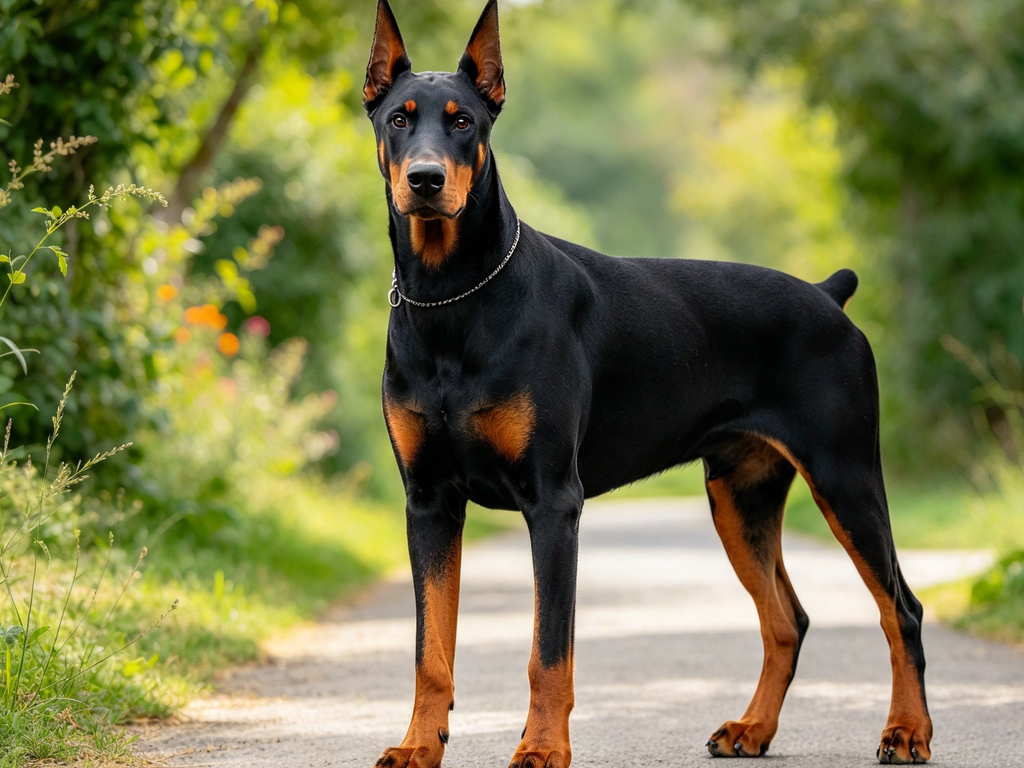
Complete Doberman Pinscher Breed Guide
Welcome to our complete Doberman Pinscher breed guide . With its sleek build, alert expression, and noble bearing, the Doberman Pinscher is one of the most athletic and intelligent dogs in the world. The breed was created in Germany in the late 19th century by Karl Friedrich Louis Dobermann, a tax collector who wanted a loyal and fearless companion to accompany him on his rounds. In French, it is called the Dobermann. Today it works as a police dog, service dog, and search-and-rescue partner, and it is also a devoted family companion.If you are also interested in popular German breeds, check out our Dachshund breed guide.
Thinking about adopting one? Here’s what you should know.
How Big Is a Doberman Pinscher?
The Doberman is a large, muscular, and elegant breed.
- Height: 63-72 cm (25-28 in), with males taller than females
- Weight: 27-45 kg (60-100 lb)
- Lifespan: 10-12 years
- Coat: Short, smooth, and shiny, in black, red, blue, or fawn, always with rust-colored markings
- Ears and tail: Naturally floppy ears and a long tail. Cropping and docking are banned in many countries, including France and the United Kingdom.
Personality: Loyal, Intelligent, and Alert
Dobermans are known for their devotion and sharp minds.
- Loyal and affectionate: They bond deeply with their family and love to be close to their people.
- Highly intelligent: They learn quickly and are among the most trainable breeds.
- Alert and protective: They are naturally watchful and make excellent guard dogs.
- Energetic and athletic: They need a job to do and thrive on activity.
- Sensitive: They respond badly to harsh training and can be easily stressed.
- Reserved with strangers: They are aloof rather than friendly with people they do not know.
- Needy for company: They do not like being left alone for long hours and are often called “Velcro dogs”.
A well-trained and well-socialized Doberman is gentle, loving, and calm at home, including with children it grows up with.
How to Take Care of a Doberman Pinscher
Feeding
Following a proper Doberman Pinscher breed guide for nutrition is essential…
Choose a high-quality food suited to their age and activity level. Large-breed puppy food supports healthy bone and joint growth. Feed 2 meals a day and avoid intense exercise around mealtimes, since the breed is at risk of bloat. Measure portions to keep them lean.
Exercise
Following a Doberman Pinscher breed guide exercise schedule ensures your energetic dog stays healthy.
This is a very active breed. Plan for 1 to 2 hours of exercise per day: running, hiking, fetch, and structured activities such as obedience, agility, or tracking. Mental stimulation is just as important. A bored Doberman can become anxious or destructive.
Grooming
Maintaining a regular Doberman Pinscher breed guide grooming routine keeps their short coat sleek.
- Brush weekly with a rubber brush or grooming mitt. Dobermans shed lightly to moderately all year round.
- Bathe only when needed.
- Clean ears, trim nails, and brush teeth regularly.
Temperature
Because of their thin coat and low body fat, Dobermans get cold easily. Provide a warm bed and a coat in cold or wet weather. They can also overheat in high temperatures, so offer shade and fresh water in summer.
Training and Socialization
Dobermans are eager to learn, but they need a confident, calm, and consistent owner. Start early with socialization: expose your puppy to many people, dogs, sounds, and places. Use positive reinforcement with treats, praise, and play, and keep sessions varied and engaging. Never use harsh or aggressive methods. Because of their size and strength, leash manners and reliable recall are a must.
Common Health Issues: Doberman Pinscher Breed Guide
Dobermans are generally sturdy, but the breed is prone to certain conditions:
- Dilated cardiomyopathy (DCM), a serious heart disease
- Von Willebrand’s disease (a bleeding disorder)
- Bloat (gastric dilatation-volvulus)
- Wobbler syndrome (a spinal condition in the neck)
- Hip dysplasia
- Hypothyroidism
- Eye problems (such as progressive retinal atrophy)
- Skin problems (such as color dilution alopecia in blue and fawn dogs)
- Certain cancers
Choose a responsible breeder who health-tests the parents (heart, hips, thyroid, and blood), and schedule regular vet check-ups, including regular heart screening.
Is a Doberman Pinscher Right for You?
A Doberman could be perfect if you are an active, confident owner, want a loyal and protective companion, and can provide daily exercise, training, and company.
It may not be the best match if you are a first-time owner, are away for long hours, live in a very small space, want a very independent dog, or live in a very cold climate without proper care for a thin-coated dog.
Final Thoughts
Loyal, smart, and deeply devoted, the Doberman Pinscher is a remarkable dog for the right owner. With early socialization, positive training, and plenty of activity and affection, it will be a faithful and gentle guardian for life.
“We hope this Doberman Pinscher breed guide helps you decide if this protective dog is right for you.”