Everything You Need to Know About This Powerful and Devoted Guardian
Rottweiler Breed Guide: Size, Temperament & Care Tips
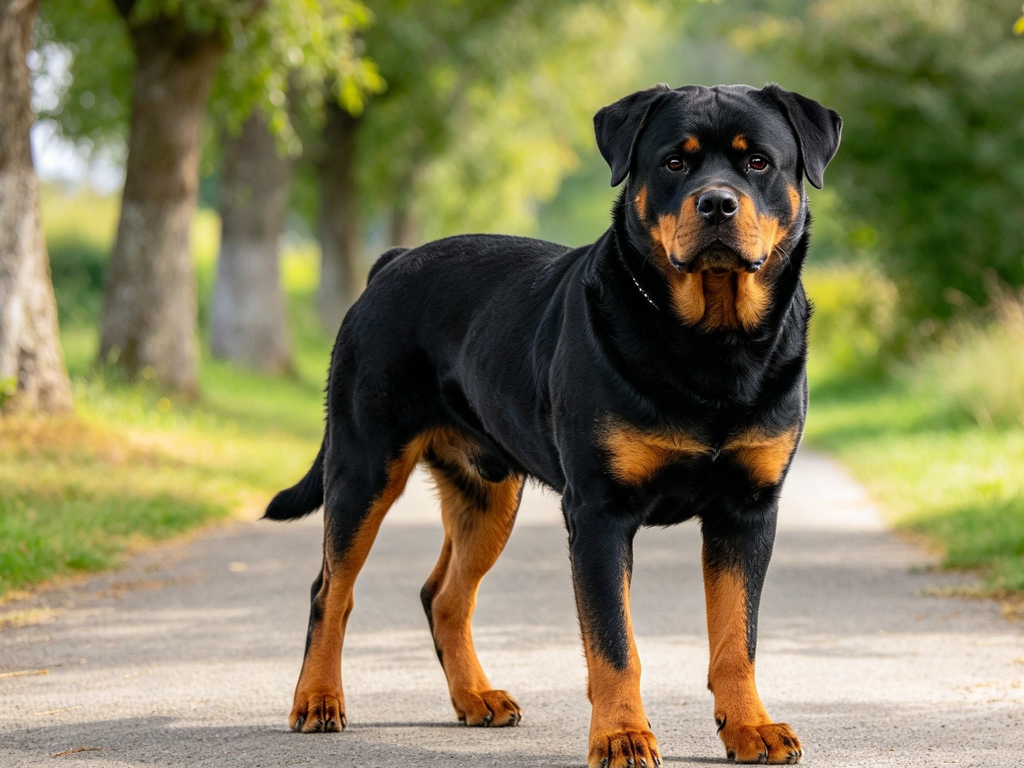
With its muscular build, calm confidence, and deep loyalty, the Rottweiler is one of the most impressive dogs in the world. The breed traces back to the German town of Rottweil, where its ancestors drove cattle and pulled butchers’ carts, which is why it was once called the “Rottweil butcher’s dog”. In French, it is simply called the Rottweiler. Today it works as a police dog, service dog, and search-and-rescue partner, and it is also a devoted family companion.
Thinking about adopting one? Here’s what you should know.
How Big Is a Rottweiler?
The Rottweiler is a large, powerful, and athletic breed.
- Height: 56-69 cm (22-27 in), with males taller than females
- Weight: 35-60 kg (77-132 lb)
- Lifespan: 8-10 years
- Coat: Short, dense, and straight double coat, always black with clearly defined tan or mahogany markings
Personality: Loyal, Calm, and Protective
Rottweilers are known for their courage and devotion.
- Loyal and affectionate: They bond deeply with their family and love to be close to their people.
- Confident and calm: A well-raised Rottweiler is steady and self-assured.
- Protective: They are naturally watchful and make excellent guard dogs.
- Intelligent: They learn quickly and love having a job to do.
- Reserved with strangers: They are aloof rather than friendly with people they don’t know.
- Strong-willed: They need a firm, fair, and consistent owner.
- Playful with family: Many stay goofy and puppy-like for years.
A well-trained and well-socialized Rottweiler is gentle and loving with its family, including children it grows up with.
How to Take Care of a Rottweiler
Feeding
Choose a high-quality food suited to their age and activity level. Large-breed puppy food supports healthy bone and joint growth. Rottweilers gain weight easily, and extra weight puts stress on their joints, so measure portions and limit treats. Feed 2 meals a day and avoid intense exercise around mealtimes to reduce the risk of bloat.
Exercise
This is an active breed. Plan for 1 to 2 hours of exercise per day: walks, fetch, hiking, and structured activities such as obedience or tracking. Mental stimulation is just as important. Avoid too much jumping and hard exercise during puppyhood to protect growing joints.
Grooming
- Brush weekly to remove loose hair. Rottweilers shed moderately all year and heavily twice a year.
- Bathe only when needed.
- Clean ears, trim nails, and brush teeth regularly.
- Wipe facial folds and drool as needed.
Temperature
Rottweilers can overheat easily because of their dark coat and strong build. Provide shade, fresh water, and exercise during cooler hours. In very cold weather, short-coated dogs may need a coat.
Training and Socialization
Early socialization and training are essential for this breed. Expose your puppy to many people, dogs, sounds, and places from a young age. Use positive reinforcement with firm, calm leadership, and keep sessions consistent and varied. Never use harsh or aggressive methods. Enrolling in a puppy class and continuing with obedience training helps you raise a balanced adult. Because of the Rottweiler’s size and strength, leash manners and reliable recall are a must.
Common Health Issues
Rottweilers are generally sturdy, but the breed is prone to certain conditions:
- Hip and elbow dysplasia
- Cruciate ligament injuries
- Certain cancers (such as osteosarcoma)
- Bloat (gastric dilatation-volvulus)
- Heart conditions (such as subaortic stenosis)
- Obesity
- Eye problems (such as entropion and progressive retinal atrophy)
- Skin allergies
- Parvovirus susceptibility in puppies, so keep vaccinations up to date
Choose a responsible breeder who health-tests the parents (hips, elbows, heart, and eyes), and schedule regular vet check-ups. Keeping your Rottweiler lean is one of the best ways to protect its joints.
Is a Rottweiler Right for You?
A Rottweiler could be perfect if you are an experienced, confident owner, want a loyal and protective companion, and can provide daily exercise, training, and socialization.
It may not be the best match if you are a first-time owner, have very little time to train, live in a very small space, are away for long hours, or don’t want a large, powerful dog. Also check local regulations, because some places have restrictions or insurance requirements for the breed.
Final Thoughts
Loyal, brave, and deeply devoted, the Rottweiler is a remarkable dog for the right owner. With early socialization, consistent training, and plenty of activity and affection, it will be a faithful and gentle guardian for life.