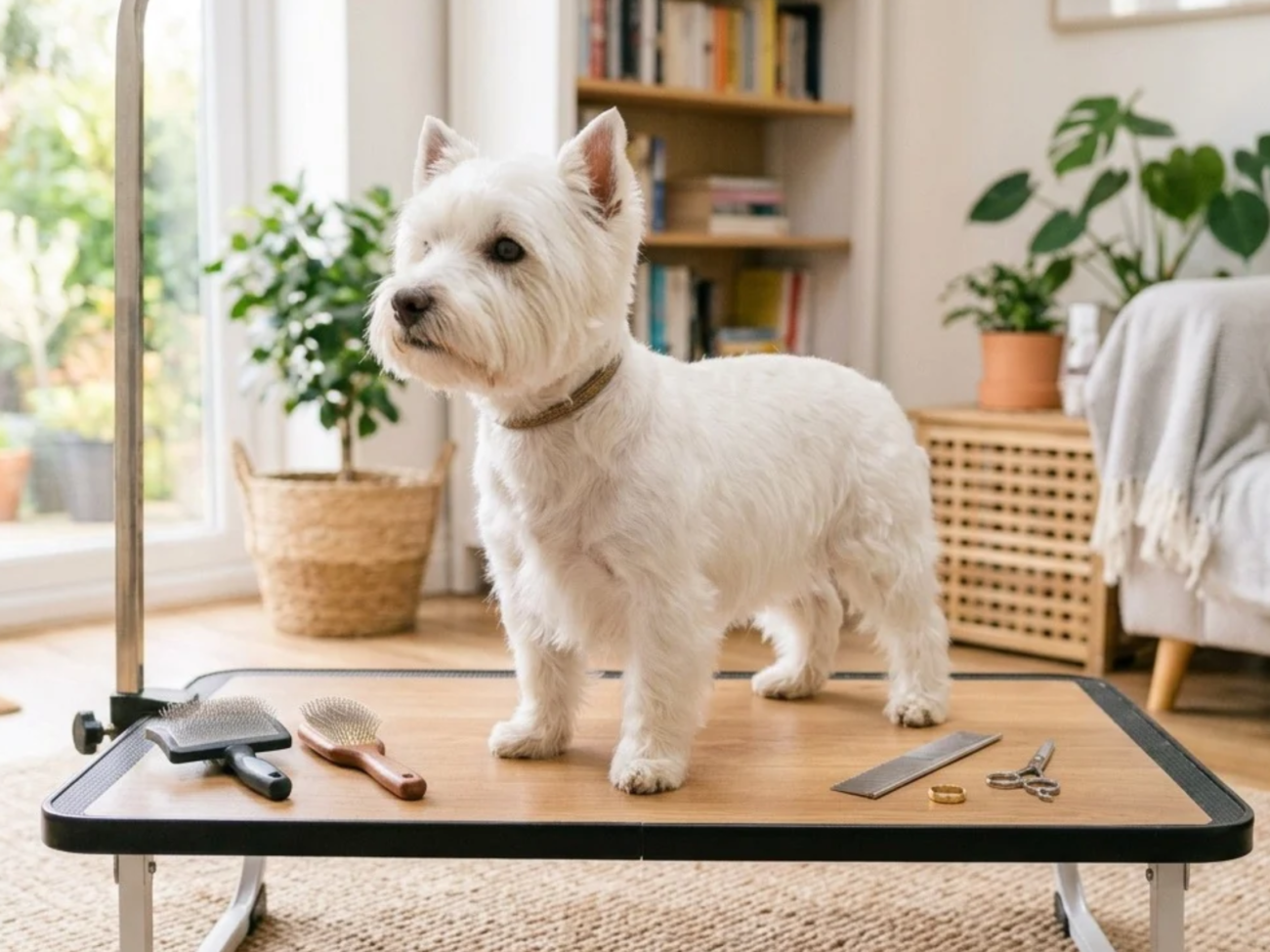
With their cheerful personalities, bright white coats, and distinctive round faces, West Highland White Terriers (affectionately known as Westies) are among the most recognizable dog breeds in the world. However, keeping that famous snowy coat clean, healthy, and sharp requires consistent care. If you are looking for an expert westie grooming guide to maintain your dog at home, you have come to the right place.
Westies possess a unique double coat designed to protect them from harsh weather and rough terrain. Their outer coat consists of straight, hard, weather-resistant fur, while the undercoat is soft, dense, and insulating. Without proper maintenance, this double coat can easily become matted, discolored, or susceptible to skin infections.
In this ultimate guide, we will break down the essential tools, explain the difference between hand stripping and clipping, and walk you through step-by-step instructions for performing westie grooming like a professional.
Table of Contents
Understanding the Westie Double Coat
Before diving into grooming routines, it is important to understand how a Westie’s fur grows. The outer guard coat protects against dirt and moisture, while the plush undercoat provides thermal insulation. Because their white fur highlights dirt and skin irritation easily, regular maintenance is vital.
Neglecting a Westie’s coat leads to stubborn mats near the belly, beard, and leg skirts. Furthermore, Westies are genetically prone to sensitive skin and allergies. Proper hygiene removes environmental allergens, dead skin cells, and trapped moisture before skin flare-ups occur.
Hand Stripping vs. Clipping: Which Is Right for Your Westie?
When planning your westie grooming approach, you must choose between two primary coat maintenance methods:
1. Hand Stripping (Show Coat & Traditional Texture)
Hand stripping involves manually plucking dead guard hairs from the outer coat using your fingers or a stripping knife.
- Pros: Preserves the coat’s hard, coarse, dirt-resistant texture and maintains vibrant skin health.
- Cons: Time-consuming and requires specialized skill.
- Best for: Show dogs, show-line Westies, or owners who want to preserve original terrier coat physics.
2. Clipping / Machine Trimming (Pet Coat & Convenience)
Clipping uses electric clippers to trim both the guard coat and undercoat to a uniform length.
- Pros: Quick, easy, comfortable for pet dogs, and easier to perform at home.
- Cons: Over time, clipping softens the harsh outer coat, turning it softer and fluffier.
- Best for: Everyday pet Westies and busy owners seeking a low-maintenance routine.
Essential Tools for Westie Grooming at Home
To achieve professional-looking results when grooming your Westie at home, invest in these essential tools:
- Slicker Brush: Excellent for working through thick undercoats and removing light tangles.
- Metal Greyhound Comb: Essential for checking hidden mats around the beard, legs, and skirt.
- Professional Dog Clippers: Models with detachable blades (No. 10 for sanitary areas, No. 4 or 5 for body length) work best.
- Thinning Shears & Straight Scissors: Used for shaping the iconic round face and tidying up paws.
- Whitening Dog Shampoo: Formulated for white coats without harsh chemical bleaches.
Step-by-Step Westie Grooming Routine
Follow this comprehensive step-by-step process to keep your terrier clean, comfortable, and stylish:
Step 1: Thorough Brushing and Dematting
Never wash or clip a matted coat, as water tightens knots. Begin by brushing your Westie from head to tail using a slicker brush. Pay close attention to high-friction areas: under the armpits, behind the ears, along the belly skirt, and through the facial beard. Use your metal comb to verify every mat is completely combed out.
Step 2: Bathing and Drying
Wash your Westie using warm water and a gentle whitening canine shampoo. Massage the lather deep into the undercoat, taking care to avoid getting soap into the eyes and inner ears. Rinse thoroughly until the water runs crystal clear; left-behind soap residue causes severe itching and skin irritation. Towel dry gently, then blow dry on low heat while brushing out the coat to build volume.
Step 3: Clipping the Body
Using a No. 4 or No. 5 clipper blade, trim along the back from the base of the neck down to the tail. Follow the natural grain of hair growth. Keep the body short while leaving longer hair along the lower chest and belly to form the classic Westie “skirt.”
Step 4: Shaping the Iconic Westie “Chrysanthemum” Head
The hallmark of great westie grooming is creating the rounded, plush facial profile.
- Comb all facial hair forward.
- Use round-tipped straight scissors to trim a round outline around the head.
- Use thinning shears to blend the facial fur smoothly into the neck and chest.
- Carefully trim around the ears, leaving the tips clean, pointed, and velvety.
Step 5: Paw and Hygiene Trimming
Trim hair flush with the paw pads using small safety scissors to prevent slipping and dirt buildup. Lightly trim around the sanitary areas with a No. 10 blade for hygiene.
Full-Body Health Care Beyond Coat Maintenance
Grooming sessions provide the ideal opportunity to perform full-body health checks on your dog.
- Ear Cleaning: Inspect for redness, dark wax, or bad odors that signal infection.
- Nail Trimming: Clip sharp tips regularly to keep paws healthy and prevent joint strain.
- Dental Maintenance: Don’t forget oral hygiene! Just as consistent dog dental care keeps gums infection-free, daily brushing prevents systemic diseases.
During grooming, always check your pet’s emotional state. If your dog exhibits signs of distress, trembling, or anxiety during grooming, evaluate why is my dog shaking to address underlying anxiety or physical discomfort. Moreover, if your grooming routine involves leaving your pet home to dry or rest, knowing how long can you leave a dog alone ensures their daily routine remains balanced.
If your Westie displays unusual lawn grazing habits after spending time outdoors in fresh-cut grass, read our detailed analysis on why do dogs eat grass to separate natural instinct from digestive issues.
For official breed standards and health recommendations, refer to resources provided by the American Veterinary Medical Association (AVMA).
Final Thoughts on Westie Grooming
Mastering westie grooming at home saves money and deepens the bond between you and your pet. By following a regular brushing routine, choosing the right trimming method, and keeping up with ears and paws, your West Highland White Terrier will stay healthy, comfortable, and looking their absolute best.