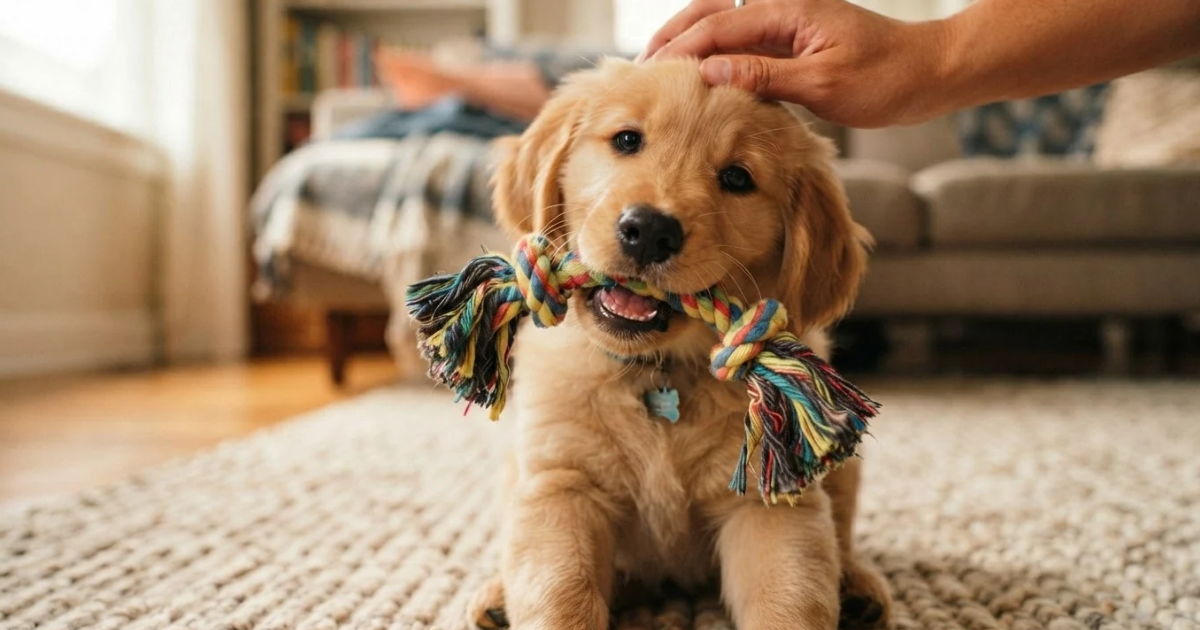
Bringing home a new puppy is pure joy—until those razor-sharp baby teeth latch onto your fingers, ankles, or favorite pair of slippers. While nipping is a completely normal part of teething and exploration, learning how to stop puppy from biting early on is essential for raising a polite, well-mannered adult dog.
Puppies explore the world with their mouths just like human babies use their hands. However, without clear boundaries, playful mouthing can quickly turn into a painful habit. Follow these five proven, positive training steps to stop puppy from biting and teach gentle play.
Table of Contents
Why Puppies Bite and Nip So Much
Before correcting the behavior, it helps to understand what drives it. Between 3 and 6 months of age, puppies lose their 28 needle-sharp baby teeth and grow 42 adult teeth. During this teething window, their gums ache and itch constantly, driving them to chew on anything within reach for relief. In addition, puppies naturally play by mouthing their littermates—so they genuinely do not realize human skin is far more sensitive than puppy fur.
5 Proven Steps to Stop Puppy From Biting
1. Redirect Teeth Onto an Appropriate Toy
Whenever your puppy puts their mouth on your skin or clothing, immediately offer a chew toy, rope, or teething ring instead. Keep toys stashed in every room so you are never caught empty-handed. Praise your puppy enthusiastically the moment they sink their teeth into the toy rather than your hand. Chilled rubber chew toys or frozen wet washcloths also work wonders to soothe sore gums.
2. Use the “Yelp and Freeze” Technique
When puppies play together, a sharp yelp signals that a bite hurt, prompting the other pup to back off. If your puppy bites too hard, let out a high-pitched “Ouch!” and go completely still for five seconds. Avoid pulling your hand away quickly, as sudden movement triggers their chase instinct and makes them bite harder.
3. End Playtime With a Brief Time-Out
If redirecting and freezing do not calm an overly excited puppy, calmly stand up, cross your arms, and walk out of the room (or step behind a baby gate) for 20 to 30 seconds. Removing your attention teaches your pup that biting immediately ends the fun. Once they settle down, return and resume gentle play.
4. Stick to a Consistent Nap Schedule
Just like overtired toddlers, exhausted puppies become cranky, hyperactive, and far more likely to nip. Young puppies need 18 to 20 hours of sleep per day. If your puppy turns into a relentless land shark in the evening, guide them to their crate or quiet bed for a nap.
5. Teach “Leave It” and “Gentle” Early
Positive obedience cues give your puppy clear instructions on what to do instead of nipping. According to the American Kennel Club, teaching bite inhibition and impulse control through short, reward-based daily sessions helps puppies develop a soft mouth before their adult teeth come in.
Common Mistakes to Avoid When Training Your Puppy
As you work to stop puppy from biting, steer clear of these counterproductive reactions:
- Never use physical punishment: Yelling, tapping their nose, or holding their muzzle shut creates fear and can lead to defensive aggression later in life.
- Avoid roughhousing with bare hands: Wrestling with your fingers teaches your puppy that human hands are chew toys. Always keep a plush toy or tug rope between your skin and their teeth.
- Ensure everyone in the house follows the same rules: Consistency across every family member helps your puppy learn twice as fast.
With patience, plenty of chew toys, and consistent boundaries, your puppy will soon outgrow the nipping phase and learn to greet everyone with gentle kisses instead.