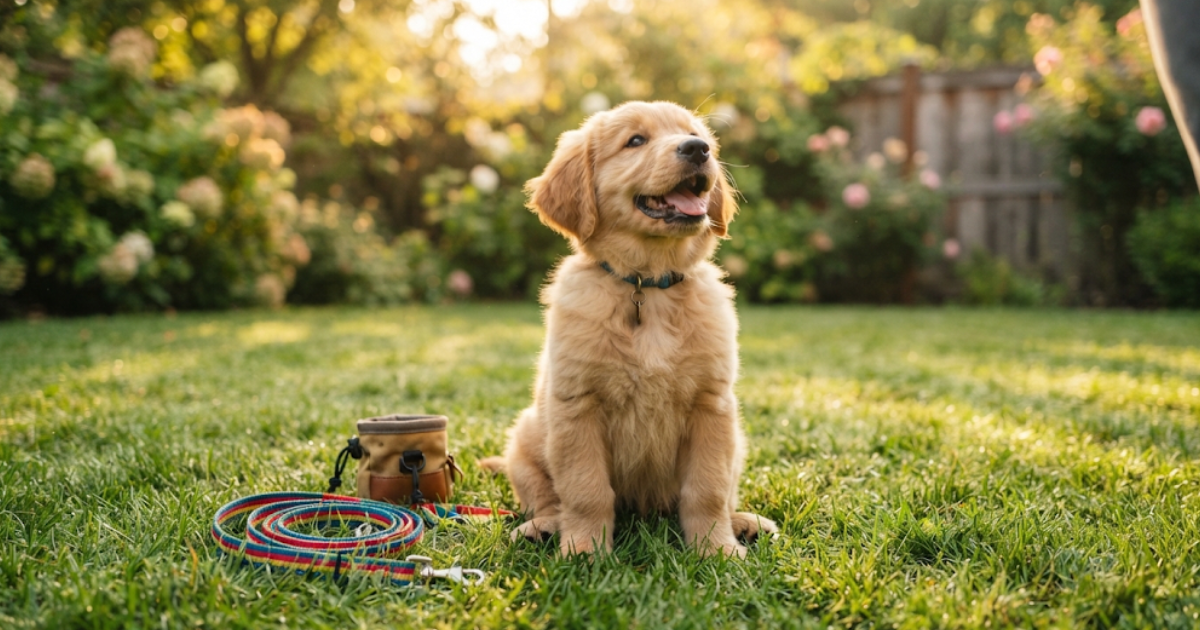
Bringing a new puppy home is one of the happiest moments in life—until you step barefoot into an unexpected puddle on the living room rug. If you are wondering how to potty train a puppy quickly without yelling or frustration, the secret lies in predictable routines, close supervision, and immediate rewards.
Puppies do not have full bladder control until they are around four to six months old, which means accidents are simply a sign of timing rather than stubbornness. By following a structured routine, learning how to potty train a puppy becomes a smooth, stress-free habit for both you and your new best friend.
Table of Contents
4 Golden Rules: How to Potty Train a Puppy Fast
Before starting your daily routine, set yourself up for success with these four foundational habits:
1. Pick One Designated Outdoor Potty Spot
Take your puppy to the exact same patch of grass or yard corner every single time. The familiar scent acts as an instant biological cue that tells your pup, “This is the bathroom.”
2. Reward Outside Immediately—Not Back Inside
Timing is everything when mastering how to potty train a puppy. Stand quietly with a pocket full of tiny, high-value treats, wait until your puppy finishes peeing or pooping, and praise cheerfully with a treat within two seconds—before walking back indoors. If you wait until you reach the kitchen, your pup will think the treat is for coming inside!
3. Supervise or Crate When You Cannot Watch
A young puppy should never roam freely through empty rooms until they have gone at least four consecutive weeks without an indoor accident. Use baby gates, a playpen, or a cozy, properly sized crate whenever you are busy cooking, working, or sleeping.
4. Clean Indoor Accidents With an Enzymatic Cleaner
Regular household sprays leave behind microscopic odor molecules that invite puppies to mark the exact same spot again. Always blot up accidents promptly and saturate the area with a pet-specific enzymatic cleaner to eliminate the scent completely.
Your 7-Day Schedule: How to Potty Train a Puppy Step by Step
Consistency builds bladder habits fast. Use this daily rhythm throughout your first week:
- Days 1–2 (Every 30 to 45 Minutes): Take your puppy outside immediately upon waking up, after every meal or drink of water, after active playtime, and right before bedtime. Keep outings calm and boring until they go.
- Days 3–4 (Introduce a Verbal Cue): As your puppy starts to squat outdoors, quietly say a consistent phrase like “Go potty” or “Do your business.” Once they finish, celebrate with a treat and five minutes of fun backyard play.
- Days 5–6 (Stretch Intervals to 60 Minutes): As your pup builds confidence and reliably eliminates at their outdoor spot, gradually extend daytime potty breaks to every hour while watching closely for sniffing or circling.
- Day 7 (Reinforce Nighttime & Transition Routines): Keep nighttime trips brief and quiet—no talking or playing—so your puppy learns that midnight outings are strictly for bathroom breaks before returning straight to bed.
How to Read Your Puppy’s “I Need to Go” Signals
Part of learning how to potty train a puppy is spotting subtle body language seconds before an accident happens. Rush your pup outside immediately if you notice them:
- Suddenly stopping mid-play to sniff the floor intensely
- Walking in tight circles or pacing near the door
- Whining, barking softly, or looking restless
- Disappearing behind a couch or into a quiet hallway
Just like teaching gentle mouth manners in our guide on how to stop puppy from biting, catching early cues and rewarding good choices builds lasting habits twice as fast.
3 Common Potty Training Mistakes to Avoid
According to the American Kennel Club, avoiding harsh reactions is critical when learning how to potty train a puppy:
- Never Punish or Rub Their Nose in Accidents: Scolding after the fact only teaches your puppy to hide behind furniture when they need to go.
- Do Not Rush Back Inside Right After They Pee: If outdoor fun ends the second they potty, smart puppies learn to hold it longer just to stay outside! Always give two extra minutes of sniffing or play after they go.
- Keep Feeding Times Consistent: Scheduled meals produce predictable potty times—typically 15 to 30 minutes after eating.
Stick closely to this routine for seven days, celebrate every outdoor win, and you will be amazed at how quickly your puppy masters the rules of the house!