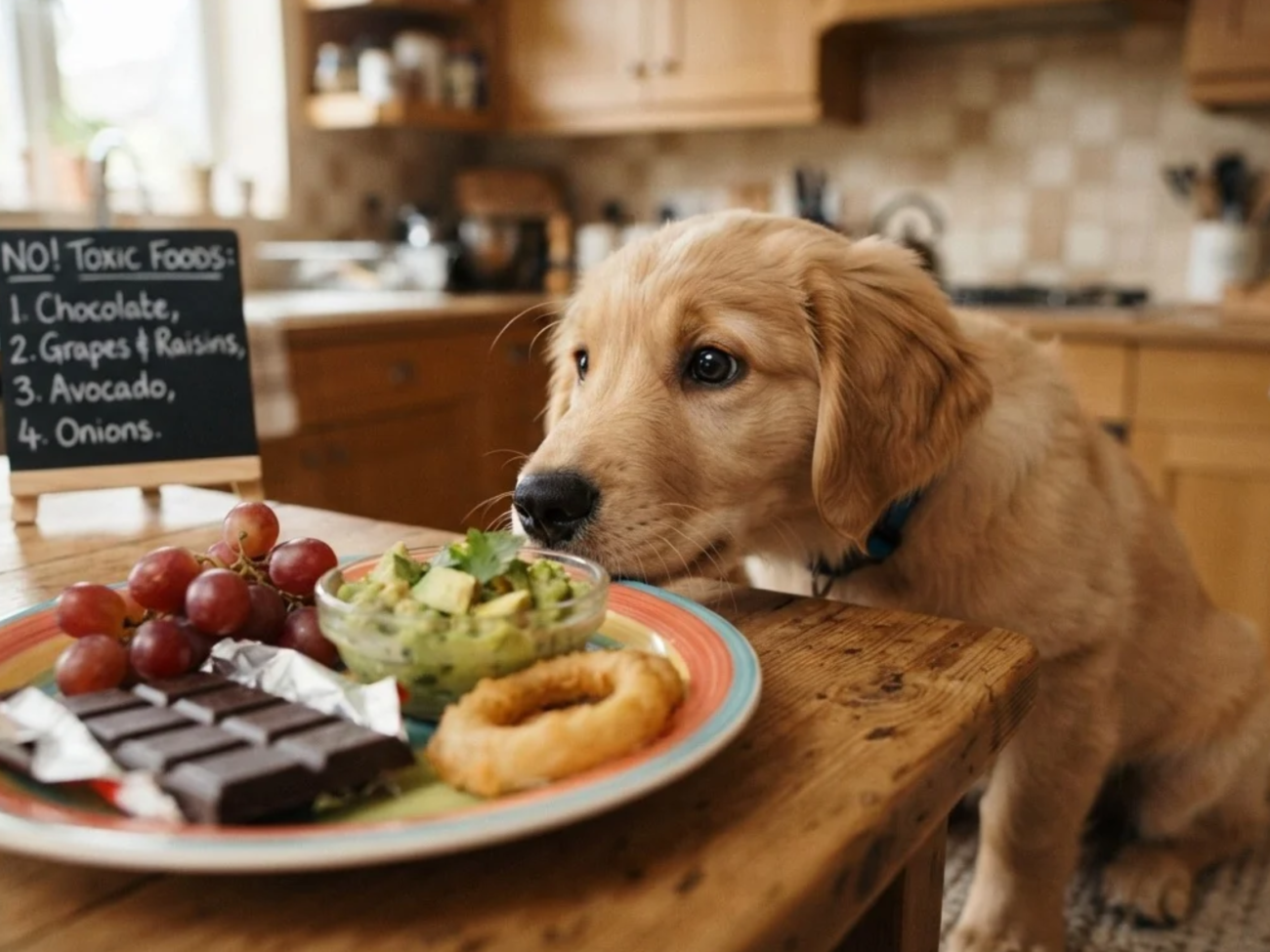
It is almost impossible to resist those big, pleading puppy eyes when you are sitting down for dinner. However, sharing a bite from your plate can quickly turn into a veterinary emergency. Knowing which toxic human foods for dogs to keep strictly out of reach is one of the most important responsibilities of every dog owner.
While some human snacks make healthy rewards, many everyday kitchen staples contain compounds that a dog’s digestive system simply cannot process. Below is our complete guide to the most dangerous toxic human foods for dogs you must avoid.
Table of Contents
Top 10 Toxic Human Foods for Dogs to Never Share
1. Chocolate and Cocoa Products
Chocolate is the most well-known danger among toxic human foods for dogs, and for good reason. It contains theobromine and caffeine, two stimulants that dogs metabolize much more slowly than humans. Dark chocolate, baking chocolate, and cocoa powder carry the highest concentrations and can trigger vomiting, diarrhea, rapid heart rate, tremors, and even seizures.
2. Grapes and Raisins
Even a single grape or raisin can cause sudden, severe kidney failure in certain dogs. Researchers still have not pinpointed the exact toxin responsible, and sensitivity varies wildly from one dog to another—meaning no amount is considered safe. Always keep trail mix, raisin bread, and fresh grapes locked away.
3. Onions, Garlic, and Chives
Whether raw, cooked, powdered, or dehydrated, all members of the Allium family damage a dog’s red blood cells and can lead to life-threatening hemolytic anemia. Watch out for hidden onion and garlic powder in table scraps, sauces, baby food, and seasoned meats. Symptoms like weakness, pale gums, and lethargy often appear days after ingestion.
4. Xylitol (Artificial Sweetener)
Found in sugar-free gum, candies, baked goods, toothpaste, and even some brands of peanut butter, xylitol (sometimes listed as birch sugar) is extremely dangerous. In dogs, it triggers a massive, rapid release of insulin, causing a life-threatening drop in blood sugar (hypoglycemia) within 30 minutes, followed by acute liver failure.
5. Macadamia Nuts
Macadamia nuts contain an unknown toxin that affects a dog’s muscles and nervous system. Within 12 hours of eating them, dogs often develop weakness in their back legs, vomiting, tremors, and hyperthermia. While rarely fatal, symptoms are painful and typically last up to 48 hours.
6. Avocado
Avocados contain persin, a fungicidal toxin found in the skin, pit, leaves, and fruit. While dogs are more resistant to persin than birds or horses, eating large amounts can cause severe stomach upset, vomiting, and diarrhea. Furthermore, the large pit poses a serious choking and intestinal blockage hazard.
7. Alcohol and Unbaked Yeast Dough
Alcohol affects a dog’s liver and brain far faster than it affects humans, leading to dangerous drops in blood sugar, blood pressure, and body temperature. Similarly, raw yeast dough expands inside a dog’s warm stomach—causing painful bloat—and ferments into alcohol, leading to alcohol poisoning.
8. Cooked Bones
Many owners assume giving a dog a leftover chicken or steak bone is a natural treat, but cooked bones become brittle and splinter easily. Sharp bone fragments can puncture your dog’s throat, stomach, or intestines, or cause a fatal obstruction requiring emergency surgery.
9. Caffeinated Drinks (Coffee, Tea, Energy Drinks)
Never let your dog lap up leftover coffee, tea, or soda. Caffeine overstimulates a dog’s central nervous system and heart, causing restlessness, rapid breathing, heart palpitations, and muscle tremors.
10. Salty Snacks and Processed Meats
Foods like bacon, deli meats, potato chips, and pretzels are packed with sodium and unhealthy fats. Too much salt can lead to excessive thirst, urination, and sodium ion poisoning, while high-fat scraps frequently trigger painful pancreatitis in dogs.
What to Do If Your Dog Eats Toxic Human Foods for Dogs
If you suspect your dog has swallowed any of these toxic human foods for dogs, act immediately:
- Stay calm and remove any remaining food from their reach.
- Note the details: Write down what they ate, roughly how much, and when it happened.
- Call your veterinarian or check the ASPCA Animal Poison Control Center emergency resources right away—do not induce vomiting unless a professional specifically instructs you to do so.
Keeping these 10 toxic human foods for dogs off your pet’s menu is the easiest way to protect them from preventable emergencies. When in doubt, stick to vet-approved dog treats and safe, plain snacks!