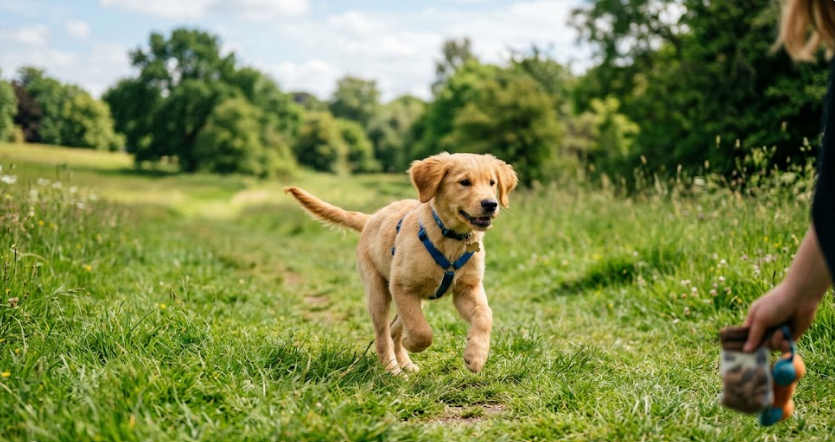
A reliable recall is one of the most important skills your dog can learn — and one of the most underestimated. It’s the difference between a relaxed off-leash hike and a frantic chase down the street. The good news is that teaching a solid “come” doesn’t require special equipment or advanced training experience, just consistency, the right approach, and plenty of patience. Here’s how to do it step by step.
1. Choose One Cue and Stick With It
Pick a single word — “come,” “here,” or your dog’s name followed by “come” — and use it every single time. Consistency matters more than the word itself. Mixing cues (“come here,” “come on,” “over here”) confuses your dog and slows down learning.
2. Start in a Low-Distraction Environment
Begin training indoors or in a quiet backyard, not at the park or on a busy street. Your dog needs to fully understand the behavior before being asked to perform it around distractions like other dogs, smells, or people.
3. Make Coming to You the Best Thing Ever
Every time your dog comes when called, reward generously — high-value treats, enthusiastic praise, or a favorite toy. The goal is for your dog to associate the recall cue with something genuinely exciting, not just an interruption to their fun.
4. Never Call Your Dog for Something Unpleasant
Avoid using the recall cue before baths, nail trims, or scoldings. If “come” becomes associated with anything negative, your dog will start to hesitate or ignore the cue altogether. Save it exclusively for positive outcomes.
5. Practice with a Long Line
Once your dog reliably responds indoors, move outside using a long training leash (15-30 feet). This gives your dog a sense of freedom while still allowing you to guide them back if they get distracted, without breaking their trust in the process.
6. Gradually Increase Distractions
Slowly introduce more challenging environments — a park with other dogs, a trail with wildlife smells, a driveway with passing cars. Increase difficulty only after your dog succeeds consistently at the current level. Rushing this step is the most common reason recall training fails.
7. Practice Often, in Short Sessions
A few five-minute sessions throughout the day are far more effective than one long training session. Frequent, short repetitions build muscle memory and keep your dog engaged without becoming bored or fatigued.
8. Never Punish a Slow or Late Recall
If your dog eventually comes—even after taking their time—reward them anyway. Punishing a delayed recall teaches your dog that coming to you leads to something bad, which undermines everything you’ve worked to build.
In short: a reliable recall is built through repetition, positive reinforcement, and patience. Start small, keep it rewarding, and increase difficulty gradually. With consistent practice, “come” can become one of the strongest and most trustworthy commands in your dog’s vocabulary.