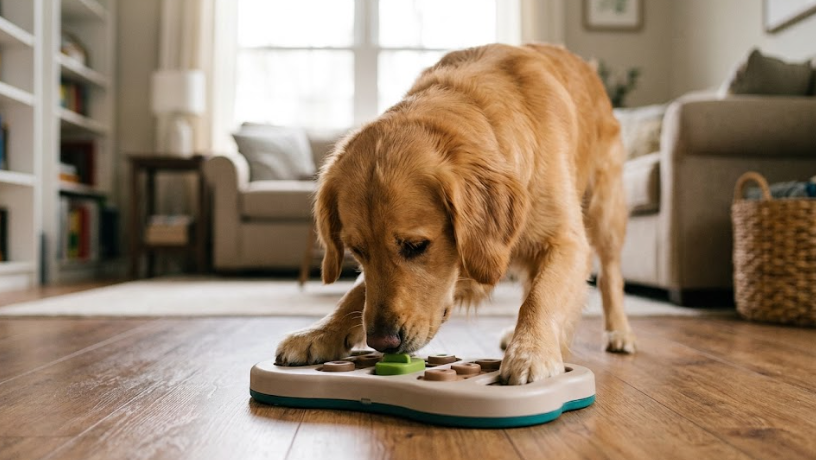
A physically tired dog isn’t always a satisfied one. Mental exercise burns energy just as effectively as a long walk — sometimes even more so — and it’s often the missing piece when a dog seems restless, bored, or prone to unwanted behaviors despite getting plenty of exercise. The good news is that keeping your dog’s brain engaged doesn’t require expensive gadgets or hours of extra time. Here are five simple ways to do it.
1. Use Puzzle Feeders and Snuffle Mats
Instead of serving meals in a regular bowl, make your dog work for their food. Puzzle feeders and snuffle mats tap into your dog’s natural foraging instincts, slowing down mealtime while giving their brain a real workout. Start with easier puzzles and increase difficulty as your dog gets the hang of it.
2. Teach New Tricks Regularly
Learning something new forces your dog to focus, problem-solve, and pay close attention to you. It doesn’t need to be complicated — a new trick every week or two, even simple ones like “spin” or “shake,” keeps their mind active and strengthens your communication with each other.
3. Play Scent Games
Dogs experience much of the world through smell, and scent work is one of the most mentally tiring activities for them. Hide treats around a room or in the yard and encourage your dog to sniff them out, or try a simple game of “find it” with a favorite toy.
4. Rotate Toys Instead of Leaving Them All Out
Dogs lose interest in toys that are always available. Keep a rotation going — put a few away and swap them out every week or so. When a toy reappears after some time away, it often feels new and exciting again, sparking renewed interest.
5. Incorporate Training Into Daily Walks
Turn a routine walk into a mental workout by asking for sits, stays, or changes in direction along the way. Practicing impulse control—like waiting calmly at a curb or ignoring a distraction—challenges your dog’s brain in ways that simply walking forward doesn’t.
In short: mental stimulation is just as essential as physical exercise for a well-balanced, content dog. A few small additions to your daily routine — puzzles, tricks, scent games, toy rotation, and mindful walks — can make a noticeable difference in your dog’s mood and behavior.